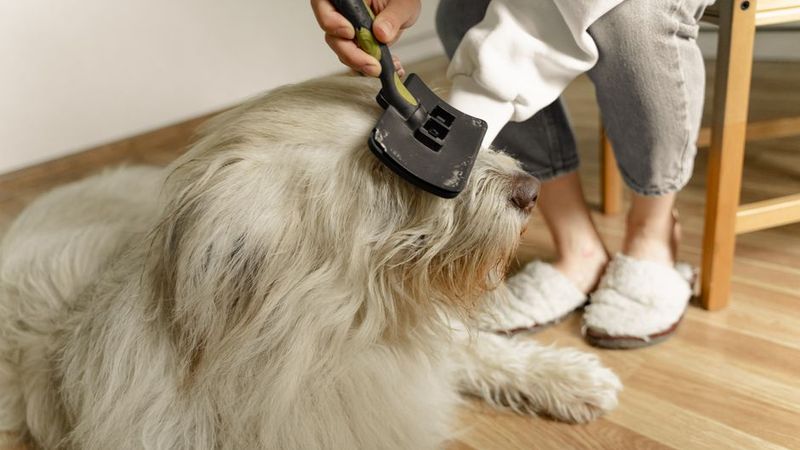
Grooming time is one of the most underestimated ongoing commitments in dog ownership, and it varies enormously by coat type rather than by size or popularity. A small dog with a high-maintenance coat can require far more weekly grooming time and far more money than a much larger dog with a simple, short coat.
This article focuses on what to expect in terms of time and cost by coat type, as a factor to weigh before choosing a breed. It isn't a how-to guide for grooming technique, which is a separate topic covered elsewhere; the goal here is to help you decide whether a breed's grooming demands fit your schedule and budget.
Short, Smooth Coats: The Low-Maintenance Baseline
Breeds with short, smooth, single-layer coats, like the Boxer, Dachshund, Vizsla, and Greyhound, generally need minimal grooming. A quick brush once or twice a week to remove loose hair, occasional bathing, and routine nail trims usually covers it, amounting to perhaps 15-30 minutes of hands-on grooming time per week. Professional grooming is rarely necessary for these breeds beyond basic bathing services, which keeps lifetime grooming costs relatively low.
Double Coats: Low Weekly Effort, Intense Seasonal Spikes
Breeds with a dense double coat, such as the Golden Retriever, Siberian Husky, German Shepherd Dog, and Pembroke Welsh Corgi, need more regular brushing, typically two to three times a week for 15-20 minutes each session to manage loose undercoat and prevent matting. During seasonal shedding periods, often called "blowing coat," that time commitment can roughly double for several weeks as the dense undercoat releases in large amounts. Professional grooming for a deep deshedding treatment every few months is common for these breeds, typically costing more due to the volume of hair involved.
Continuously Growing Coats: The Highest Time and Cost Commitment
Breeds like the Standard Poodle, Shih Tzu, Yorkshire Terrier, and Old English Sheepdog have hair that grows continuously rather than shedding out on a cycle, which means it needs regular cutting and near-daily attention to prevent matting. Daily or near-daily brushing of 10-20 minutes is typically necessary, along with professional grooming appointments roughly every four to six weeks that can run considerably higher in cost than a basic bath-and-brush service for a short-coated breed, given the clipping and styling work involved.
Comparing Grooming Commitment by Coat Type
| Coat Type | Example Breeds | Typical Weekly Brushing | Professional Grooming Frequency |
|---|---|---|---|
| Short, smooth | Boxer, Dachshund, Greyhound | 15-30 minutes | Rarely needed beyond bathing |
| Dense double coat | Golden Retriever, Siberian Husky, Corgi | 30-60 minutes (more during seasonal shedding) | Occasional deshedding treatment every few months |
| Wiry/terrier coat | Airedale Terrier, Scottish Terrier, Miniature Schnauzer | 30-45 minutes | Hand-stripping or clipping every 6-8 weeks |
| Continuously growing | Standard Poodle, Shih Tzu, Old English Sheepdog | 60-140 minutes (near-daily) | Professional trim every 4-6 weeks |
Notice how little this table has to do with the dog's size. A Standard Poodle at 45-70 pounds (20-32 kg) requires more grooming time than a Great Dane nearly three times its weight, because coat structure drives the workload, not body size.
A Worked Cost Example
Consider two medium-sized breeds with very different coats: a Boxer and a Standard Poodle. Over a year, a Boxer owner might spend minimal money on professional grooming, relying mostly on at-home brushing and occasional baths. A Standard Poodle owner, by contrast, typically budgets for a professional grooming appointment every four to six weeks, which adds up to roughly eight to thirteen appointments annually. Over several years of ownership, that difference in recurring grooming cost becomes a significant gap between the two breeds, even though both are similar in size and energy level.
Factoring Grooming Into Your Breed Decision
Before settling on a breed, estimate both the weekly time commitment and the recurring professional cost realistically, rather than focusing only on the coat's appearance. A beautiful, flowing coat often comes with the highest ongoing time and money commitment of any coat type, while a plain, short coat that seems less appealing in photos may be the easier long-term choice for a busy household or tighter budget. You can compare breeds side by side on grooming scores alongside shedding and size to see the full picture before deciding.
Common mistakes
- Assuming grooming time correlates with a dog's size, when coat type, not body size, is the real driver of weekly grooming workload.
- Underestimating the cost of professional grooming for continuously growing coats, which typically need appointments every four to six weeks indefinitely.
- Choosing a breed for its appearance in photos without researching how much upkeep that specific coat style requires to maintain.
- Forgetting that double-coated breeds have intense seasonal shedding periods that briefly multiply the normal weekly grooming time.
- Skipping regular brushing between professional appointments, which allows mats to form and can make grooming sessions more time-consuming and uncomfortable for the dog.
- Budgeting only for the dog's food and vet care while overlooking recurring grooming costs that can rival or exceed other expenses over a dog's lifetime.
Frequently asked questions
Which coat type requires the least grooming time overall?
Short, smooth, single-layer coats, found in breeds like the Boxer, Dachshund, and Greyhound, generally require the least grooming time, often just a weekly brush and occasional bath with minimal professional grooming needed.
Why do some small breeds need more grooming than large breeds?
Grooming workload is driven by coat type rather than body size, so a small breed with a continuously growing coat, like a Shih Tzu, can need far more weekly time and professional grooming than a much larger breed with a short, simple coat.
How often do double-coated breeds need professional grooming?
Many double-coated breeds don't need frequent professional grooming for cutting, since their coat doesn't require trimming, but periodic professional deshedding treatments every few months can help manage the heavy seasonal shed.
Is at-home brushing enough, or is professional grooming necessary?
It depends on the coat type. Short and double-coated breeds can often be maintained well with consistent at-home brushing, while continuously growing coats generally need professional clipping or trimming on a recurring schedule that at-home care alone can't fully replace.