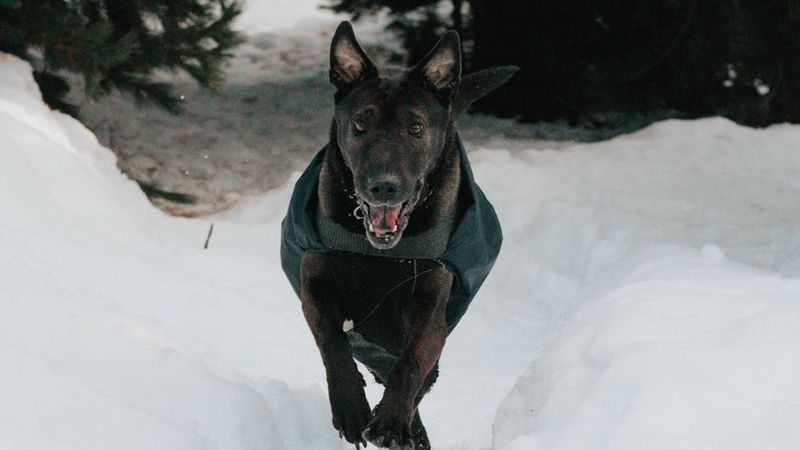
Winter brings its own set of everyday hazards for dogs: ice, de-icing salt, dry indoor air, and darkness that shows up earlier each afternoon. None of these require a dramatic response, just a routine that accounts for them.
How much winter changes your day-to-day routine depends heavily on your dog's coat type and size, but a few basics apply across the board, regardless of what breed you own.
Paw Care: Ice, Salt, and Snowballing
Sidewalk de-icing salt and chemical ice melt can irritate paw pads and cause stomach upset if licked off afterward. After every winter walk, wipe or rinse your dog's paws with a damp towel, paying attention to between the toes where salt and small ice chunks tend to collect.
Dogs with longer fur between their toes are prone to "snowballing," where packed snow and ice form uncomfortable clumps that can make walking painful. Keeping the fur around the paws trimmed in winter helps prevent this. Paw balm or wax can add a protective layer against salt and cold surfaces, and booties are worth trying for dogs that tolerate them, especially on days with heavy salt or rough, icy terrain. Watch for limping, excessive paw licking, or reluctance to walk, which can signal irritation or that a paw has gotten too cold.
Cold Tolerance by Coat Type
Cold tolerance varies enormously across breeds, and coat type is the biggest factor. Thick double-coated breeds built for cold climates handle winter comfortably, while thin-coated, small, or lean breeds need real protection even on a moderately cold day.
| Coat type / breed example | Cold tolerance |
|---|---|
| Siberian Husky, Bernese Mountain Dog, Newfoundland, Saint Bernard (thick double coats) | Built for cold weather; generally comfortable outdoors in winter conditions |
| Greyhound, Whippet, Doberman Pinscher (thin or minimal coats, low body fat) | Limited; a coat or sweater is often needed for anything beyond a quick trip outside |
| Chihuahua and other small toy breeds | Chills quickly due to small body size; needs a coat and shortened time outdoors in cold weather |
| Medium, moderately coated breeds | Generally fine for normal walks, with some judgment needed on extreme cold days |
If you're choosing a breed with a cold climate in mind, compare breeds side by side to see climate tolerance ratings before deciding.
Shorter Days: Walking Safely in Low Light
Winter's early sunsets mean a lot of regular walk times shift into dusk or full darkness without you necessarily planning for it. Visibility is the main concern here, both your dog's visibility to drivers and your own ability to see hazards like ice patches or debris on the sidewalk.
A reflective or lighted collar, leash, or harness makes a real difference for drivers and cyclists spotting you both well before they're close. Carrying a flashlight or headlamp helps you see the ground ahead, which matters more in winter than any other season because of ice. Stick to familiar, well-lit routes during dark walks rather than exploring new areas, and consider shifting the timing of at least one daily walk earlier if darkness is making the usual route feel unsafe.
Indoor Air and Skin Dryness
Winter affects dogs indoors too, not just outside. Heated indoor air tends to be drier than normal, which can lead to flaky, itchy skin and a duller coat over the season. A humidifier in the main rooms your dog spends time in can help, as can making sure your dog stays well-hydrated, since dogs sometimes drink less in winter than they do during warmer months.
Regular brushing helps distribute natural skin oils through a dry coat and gives you a chance to spot irritation early. If dry skin seems severe or your dog is scratching excessively, check with your veterinarian rather than assuming it's purely seasonal, since some skin issues that show up more obviously in winter have other underlying causes.
Car Safety in Cold Weather
A parked car in cold weather can drop to dangerously low temperatures just as quickly as it heats up in summer, so the same rule applies in both seasons: don't leave a dog alone in a parked car. This matters especially for small, short-coated, senior, or young dogs, who lose body heat faster than larger or heavily coated dogs.
Before road trips in winter, check that your dog has a comfortable, draft-free spot in the car, and pack a blanket in case of car trouble or an unexpected delay along the route. If you're warming up the car engine in a garage before a trip, make sure your dog isn't anywhere near the exhaust and that the garage is well-ventilated.
When a Coat or Boots Make Sense
Not every dog needs winter gear, but for the breeds and situations where cold tolerance is limited, it's a genuinely useful tool rather than something purely decorative. A well-fitted coat helps thin-coated, small, senior, or short-haired dogs retain body heat on walks, and boots protect paw pads from both cold surfaces and salt or chemical ice melt.
Introduce any new gear gradually indoors before relying on it outside, since many dogs need a few short, low-pressure sessions to get comfortable with the feel of a coat or boots on their body and paws. Check the fit regularly through the season, since a coat that fit well in early winter may need adjusting if your dog's weight changes.
Common mistakes
- Skipping paw rinses after walks on salted or treated sidewalks.
- Assuming a thick-coated breed and a thin-coated breed need the same amount of winter protection.
- Walking in the dark without reflective gear or a light source.
- Leaving a dog alone in a parked car in cold weather, assuming cold is less risky than heat.
- Putting a coat or boots on a dog for the first time right before a long walk instead of practicing indoors first.
Frequently asked questions
Do all dogs need a winter coat?
No. Thick double-coated breeds built for cold climates generally don't need one, while thin-coated, small, senior, or short-haired dogs often benefit from a well-fitted coat in cold weather.
Why does de-icing salt bother dogs' paws?
Salt and chemical ice melt can irritate paw pads on contact and cause stomach upset if licked off afterward, which is why rinsing paws after winter walks is a good habit.
Is it safe to leave a dog in a parked car in winter since it's cold outside anyway?
No. A parked car can get dangerously cold quickly in winter, the same way it gets dangerously hot in summer, so dogs should never be left alone in a parked car in any season.
How can I keep my dog safe walking in the dark during winter?
Use reflective or lighted gear so drivers and cyclists can see you both, carry a light source to spot ice and hazards, and stick to familiar, well-lit routes.