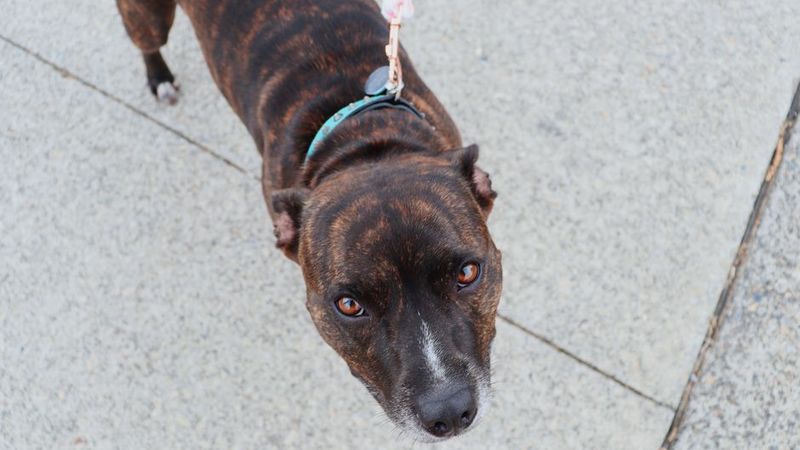
Leash pulling usually isn't defiance. It's a dog moving at a natural walking pace that happens to be faster than a human's, discovering early on that pulling gets it where it wants to go faster. Once that pattern is reinforced by a few hundred walks, it becomes a strong habit, which is why pulling can feel so hard to undo even in an otherwise well-behaved dog.
The fix is a mix of consistent technique and the right equipment for the dog in question. None of it requires force, and overcorrecting with a sharp leash yank or a check-chain style collar used aggressively tends to create new problems, like leash reactivity or a dog that associates walks with tension, rather than solving the pulling itself.
Why Pulling Happens and Why It's So Persistent
A dog that pulls and gets to keep moving forward has just been rewarded for pulling, whether the owner meant to reward it or not. Over enough repetitions, this becomes the dog's default walking style, since it has worked every time. Breeds bred for pulling-adjacent work, like sled dogs, or breeds with a lot of natural drive and energy, such as many sporting and herding breeds, often pull harder and need more consistent practice to unlearn it, though any dog of any breed can develop the habit.
Undoing it means making forward motion depend on loose-leash walking instead of pulling. That single rule, applied consistently across every walk, is the foundation everything else below builds on.
Equipment Notes: What Each Option Does
Equipment doesn't replace training, but the right setup makes training easier and the wrong setup can work against you. This is general information, not a specific product recommendation, since the right choice depends on the individual dog's size, strength, and neck sensitivity.
| Equipment | How it works | Consideration |
|---|---|---|
| Front-clip harness | Clip sits on the chest; pulling turns the dog sideways rather than letting it drive forward | Popular for dogs that pull hard; doesn't teach loose-leash walking on its own |
| Back-clip harness | Clip sits between the shoulder blades | Comfortable for most dogs, but can make pulling easier since it doesn't redirect forward motion |
| Flat collar | Standard collar, leash clips at the neck | Fine for dogs that don't pull hard; more pressure on the neck if a dog lunges or pulls |
| Head halter | Fits over the muzzle; guides the head, and the body follows | Very effective for some strong pullers; needs a proper introduction so the dog doesn't resist the fit |
A front-clip harness or head halter is commonly recommended as a management tool for dogs that pull hard, specifically because it makes pulling physically less effective while training catches up, not because either one is required for every dog.
The Stop-and-Wait Method, Step by Step
This method relies on one consistent rule: the leash only moves forward when there's no tension on it. It takes patience in the first week or two, with walks that feel slow and stop-and-start, but it builds a habit that holds up long-term without needing continuous management from the owner.
- Start in a low-distraction area, like a driveway or quiet backyard, rather than a busy sidewalk.
- The instant the leash goes tight, stop walking completely. Don't yank back or keep moving forward against the pull.
- Wait for any slack to return to the leash, even a small amount, which might mean the dog turns back toward you or simply stops pulling.
- The moment there's slack, mark it and reward, either with a treat or simply by resuming the walk forward as the reward itself.
- Resume walking, and repeat the stop the instant tension returns.
- Gradually increase distance and distraction once the dog is consistently loose-leash in the easy setting, moving to a quiet street, then a busier one.
Expect short walks in the beginning, since early sessions involve a lot of stopping. The payoff is a dog that learns pulling gets it nowhere, while a loose leash keeps the walk moving, which is a far more durable lesson than any single correction.
Rewarding Position, Not Just Absence of Pulling
Beyond simply stopping when the leash tightens, actively rewarding the dog for walking near your side speeds up the process. Carry a few treats and reward the dog periodically while it's in a good position next to you, rather than only reacting when it pulls. This gives the dog a reason to choose the position you want, instead of just avoiding the one you don't.
Changing direction unpredictably when the dog gets ahead, rather than always stopping in place, is another technique some trainers use, since it teaches the dog to pay attention to where you're headed instead of assuming a straight line forward. Either method, or a mix of both, works as long as it's applied consistently across walks.
Troubleshooting Common Sticking Points
Progress often stalls for a specific, fixable reason rather than because the method doesn't work for a particular dog. A few patterns show up often enough to call out directly.
- Pulling toward specific triggers (other dogs, squirrels, people): This is a higher-distraction version of the same problem. Build distance from the trigger first, practice at that distance, then close the gap gradually over many sessions.
- Fine on quiet streets, terrible near home or the car: Dogs often pull hardest in anticipation of something exciting right at the start or end of a walk. Practice the stop-and-wait rule specifically in that zone rather than assuming it will generalize automatically.
- Walks feel like no progress after a week: Pulling habits built over months or years don't unwind in days. Consistency across every walk, not just training sessions, matters more than any single technique.
- Multiple walkers in the household get different results: If one person stops consistently and another lets the dog pull, the dog gets mixed signals. Everyone walking the dog needs to apply the same rule.
What a Loose Leash Should Actually Look Like
The goal isn't a rigid heel with the dog glued to your leg for the entire walk, which is a more advanced, formal skill. For everyday walking, loose-leash manners mean the leash stays slack, the dog can sniff and explore within the length of the leash, and it doesn't drag the owner forward. A dog slightly ahead or slightly behind, as long as there's no tension, is perfectly fine for most households.
Breeds with a strong natural drive to move, like many in the sporting and working groups, may need more consistent practice and more physical exercise overall before loose-leash walking becomes easy, simply because they have more built-up energy looking for an outlet. Matching a dog's exercise needs to its breed tendencies, something you can check by comparing breeds, makes leash training considerably easier across the board.
Common mistakes
- Yanking the leash or moving forward against a dog's pull, which can escalate tension rather than reduce pulling.
- Expecting a front-clip harness or head halter to solve pulling on its own without consistent training.
- Only reacting when the dog pulls, instead of also rewarding good position proactively.
- Practicing only in quiet settings and expecting the behavior to transfer automatically to busy environments.
- Letting some household members allow pulling while others correct it, which sends the dog mixed signals.
Frequently asked questions
What's the best equipment to stop a dog from pulling?
A front-clip harness or head halter is commonly used for dogs that pull hard, since it reduces how effective pulling feels while training catches up. Neither replaces training, and the best fit depends on the individual dog.
How long does it take to fix leash pulling?
It depends on how long the habit has been reinforced and how consistently every walker applies the same method. Many dogs show noticeable improvement within a few weeks of consistent practice, though strong pullers may take longer.
Should I use a retractable leash while training?
A standard, fixed-length leash (around 4 to 6 feet) gives more consistent control for training purposes than a retractable leash, which makes it harder to apply a consistent stop-and-wait method.
My dog only pulls toward other dogs. Is that the same fix?
It's the same underlying method applied at a greater distance from the trigger. Build distance first, practice loose-leash skills at that distance, and gradually close the gap over many sessions rather than expecting success right next to the trigger immediately.
Is it okay to use a prong or choke collar for pulling?
These tools carry real risk of injury and can create fear-based reactions if used incorrectly, so they're best avoided without hands-on guidance from a certified trainer who can assess fit and technique in person.