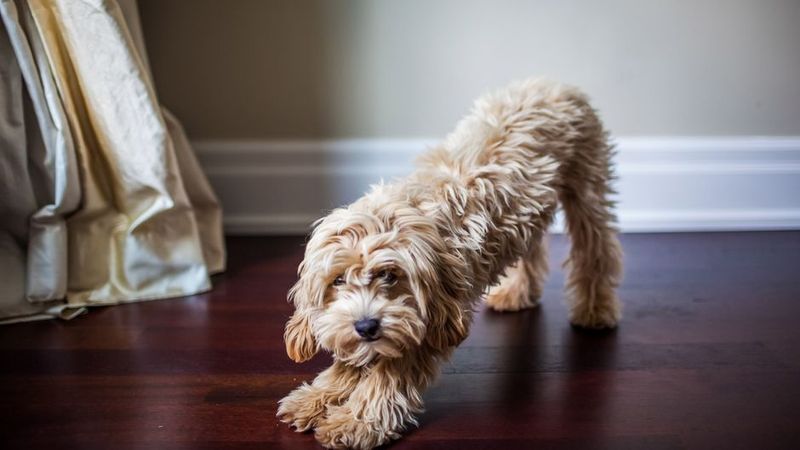
A dog cannot say when a nail trim is starting to hurt or when a bath has gone on past its comfort point, but it almost always shows it. Reading those small signals in the moment, during brushing, bathing, nail trims, and vet visits, lets you pause or adjust before a dog feels like it has to escalate to make itself heard.
This is a daily-care skill, not a training exercise. The goal here is noticing what a dog is communicating during routine handling, so sessions stay calm and the dog keeps trusting the process, rather than correcting behavior.
Stress Signals to Watch For
Stress during handling tends to show up gradually, in small signals, well before a dog growls, snaps, or struggles outright. Catching the early signals and pausing gives a dog a chance to settle before things escalate to that point.
- Whale eye: the whites of the eyes showing in a wide crescent, often while the head stays turned away
- Flattened or pinned-back ears
- A tucked tail, or a tail held low and still instead of relaxed
- Panting when it is not hot and the dog has not been active
- Stiff, frozen posture, sometimes called "statue" stillness, rather than relaxed stillness
- Lip licking or repeated yawning with no obvious reason
Any one of these alone can mean very little in isolation, but several appearing together, or a sudden shift from relaxed to several of these at once, is a clear sign to slow down or pause the activity.
Calming Signals a Dog Uses on Itself and on You
Dogs also use a set of behaviors, sometimes called calming signals, to lower tension in a situation, both for themselves and to communicate to a person or another dog that they mean no harm. Recognizing these helps separate a dog that is coping on its own from one that needs a break.
A shake-off, the same full-body shake a dog does after a bath, often appears after a stressful moment passes, almost like a reset. Slow blinking, turning the head or body slightly away, or sniffing the ground during a pause in handling are all common self-soothing behaviors. Seeing a dog use these signals during a grooming or nail-trimming session is generally a good sign that it is managing its own stress, rather than something to interrupt or redirect.
Body Language During Grooming and Bathing
Grooming and bathing involve sustained handling, which makes gradual stress buildup more likely than a one-off trigger. A dog that starts a brushing session loose and relaxed but grows stiffer, pulls away more, or starts avoiding eye contact partway through is signaling that the session has gone on longer than it is currently comfortable with, even if nothing painful has happened.
During a bath specifically, watch for a tucked tail combined with trying to climb out, trembling beyond what cold water alone explains, or a dog that goes unusually still and unresponsive, sometimes mistaken for calm compliance when it is closer to shutting down. Shortening the session, taking a break, or ending on a calmer note rather than pushing through to finish everything in one sitting tends to keep future sessions easier, not harder.
Body Language During Nail Trims
Nail trims draw a strong reaction from many dogs because the handling is precise, paw-focused, and involves a tool many dogs are naturally wary of. Paw-pulling that escalates rather than settles, a sudden intense stare at the clipper, or freezing completely as a paw is picked up are all signs the dog is more anxious than it may initially appear.
A dog that tolerates the first one or two nails calmly but grows increasingly tense with each subsequent nail is telling you the session's length, not necessarily the nail trim itself, is the problem. Stopping after a few nails and finishing the rest in a later session respects that signal and tends to produce a more cooperative dog at the next sitting than pushing through a full set in one go.
Body Language at the Vet's Office
A vet visit combines an unfamiliar environment, unfamiliar hands, and often an exam table, which stacks several stress triggers at once even for dogs that are generally easygoing at home. Watch for a tucked tail from the moment the dog enters the building, reluctance to walk toward the exam room, trembling on the table, or a dog that goes still and unresponsive during handling, which is a shutdown response rather than genuine calm.
Bringing a familiar towel or blanket, high-value treats, or simply asking the veterinary staff to slow down and pause between steps can noticeably ease a stressed dog through a visit. None of this is about managing a medical issue; it is about reading and responding to the dog's comfort during handling it does not fully understand.
What to Do When You See Stress Signals
Noticing a stress signal is only useful if it changes what happens next. Pausing the activity for a few seconds, letting the dog reposition or move slightly, and resuming at a slower pace is usually enough to address mild stress signals like lip licking or a stiffened posture.
A sturdier response, such as ending the session early and finishing later, makes sense when several stress signals stack up together or when a dog's signals escalate despite a pause. Over time, responding consistently to these small signals, rather than overriding them to finish a task faster, tends to build a dog that tolerates routine handling more easily rather than less.
Common mistakes
- Mistaking a frozen, still dog for a calm, compliant one during handling
- Pushing through a full grooming or nail-trim session despite clear stress signals, to finish faster
- Ignoring small early signals like lip licking or whale eye until the dog escalates to growling or snapping
- Treating calming signals, like shake-offs or sniffing, as distraction or disobedience rather than self-soothing
- Assuming a dog that tolerates handling at home will react the same way in an unfamiliar setting like a vet's office
Frequently asked questions
What does it mean when my dog yawns during grooming?
A yawn with no obvious tiredness, especially alongside other signals like lip licking or a stiff posture, is commonly a mild stress signal rather than sleepiness.
Is it bad if my dog shakes off during a nail trim?
No, a shake-off often signals the dog releasing tension after a stressful moment, which is generally a sign it is coping rather than something to worry about.
How can I tell if my dog is just tired versus stressed at the vet?
A tired dog usually stays loose and relaxed even while resting, while a stressed dog tends to show a tucked tail, stiffness, or a frozen posture alongside any stillness.
Should I stop a grooming session the moment I see any stress signal?
A brief pause is usually enough for a single mild signal; stopping the session entirely makes more sense when several signals appear together or escalate despite a pause.