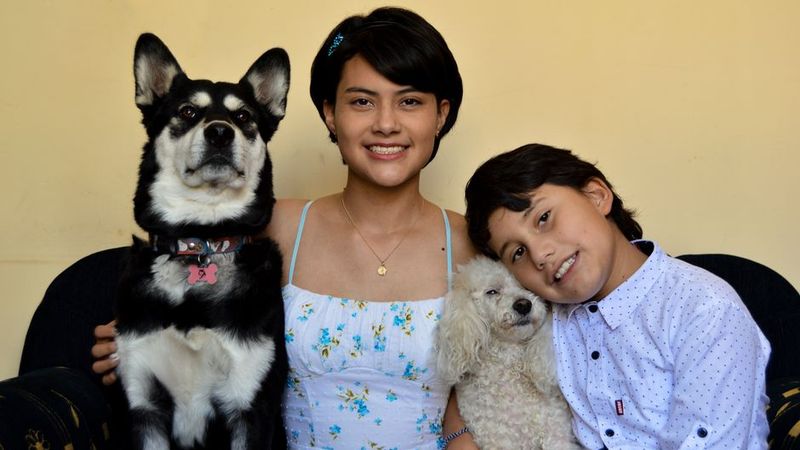
Bringing a new dog home to a household with kids already in it is a different task than picking a kid-friendly breed in the first place. The decision is made. What matters now is how the first meeting goes, how the first few weeks unfold, and how well everyone in the house, two-legged and four-legged, learns to read each other.
A calm, structured introduction sets the tone for the relationship that follows. Rushing it, even with the gentlest dog and the most excited kids, tends to create problems that take much longer to undo than the extra patience would have taken up front.
Before the Dog Comes Home: Setting Ground Rules
Do this part before the dog is in the house, not after, while everyone is calm and can actually absorb it. Sit down with kids old enough to understand and go over a short list of rules: no running up to the dog, no grabbing or hugging without checking the dog is comfortable, no bothering the dog while it's eating or sleeping, and no following the dog into a crate or safe space it's retreated to.
Give the dog a designated safe space, like a crate or a quiet corner with a bed, from day one, and make that space off-limits to kids entirely. A dog needs somewhere to retreat when it's overwhelmed, and a space that's actually respected matters more than any amount of verbal instruction once things get busy.
For younger kids, roleplay the first meeting ahead of time: practice sitting still, speaking in a quiet voice, and letting the dog approach rather than approaching it. Kids who've rehearsed calm behavior tend to manage it much better in the moment than kids hearing the instructions for the first time as the dog walks in.
The First Meeting: Step by Step
Keep the first meeting low-key and short rather than a big event. A quiet room, one or two family members at a time, and a leash on the dog if there's any uncertainty about its comfort level all help keep the energy manageable.
- Have kids sit on the floor rather than standing over the dog, which reads as less intimidating
- Let the dog approach the kids, not the other way around
- Keep voices low and movements slow for the first several minutes
- Watch the dog's body language throughout: a loose, wiggly body and soft eyes are good signs; stiffness, a tucked tail, or growling mean it's time to pause
- End the first meeting while it's still going well, rather than letting it run long and tire everyone out
If you have more than one child, introduce them one at a time rather than as a group, especially with a shy or nervous dog. A group of excited kids approaching at once is overwhelming even for a confident, well-socialized dog.
The First Two Weeks: What to Watch For
The first two weeks are an adjustment period for everyone, not just the dog. Keep interactions supervised the entire time, meaning an adult is actually present and watching, not just in the next room. This is the window where small misunderstandings, like a toddler grabbing an ear or a dog nipping at a child reaching for a toy, are most likely, and also the window where they're easiest to catch and correct before they become patterns.
Keep the household routine as predictable as possible during this stretch: consistent feeding times, consistent walk times, and a consistent spot for the dog to sleep. Dogs settle into a household faster when the schedule is steady, and kids tend to feel more confident around a dog whose patterns they can predict too.
Watch for signs of stress in the dog, like hiding, loss of appetite, or avoiding the kids, as well as signs the kids are losing patience or interest once the novelty wears off. Both are normal in the first couple of weeks, but both are worth naming out loud as a family so nobody feels like it's a hidden problem.
Age-Appropriate Roles for Kids
Giving kids a real role in caring for the dog builds the relationship faster than passive co-existing in the same house does. What's appropriate depends heavily on age.
| Age range | Appropriate role |
|---|---|
| Under 5 | Supervised petting only; no unsupervised time with the dog, ever |
| 6-9 | Helping fill the water bowl, tossing a toy under supervision, simple commands with adult backup |
| 10-12 | Helping with feeding on a schedule, short supervised walks in a safe, enclosed area |
| 13 and up | Independent walks on familiar routes, helping with basic training and grooming |
These are general guidelines, not fixed rules. A particularly calm dog and a particularly responsible child may handle more independence sooner, while a nervous dog or an exuberant child might need the more cautious end of the range held longer than the age alone suggests.
Warning Signs That Mean Slow Down
Most dog-kid introductions go smoothly with patience, but it's worth knowing the signs that mean you need to pull back and slow the pace rather than push through. A dog that freezes, growls, shows the whites of its eyes, or repeatedly tries to leave the room when kids approach is communicating discomfort, not being difficult.
If you see repeated warning signs, separate the dog and kids more deliberately for a few days, go back to shorter, more controlled interactions, and consider involving a certified trainer or your veterinarian for guidance specific to your dog. Pushing through warning signs because "he'll get used to it" is one of the more common ways a manageable adjustment period turns into a lasting problem. If a dog ever bites or snaps at a child, stop unsupervised interactions immediately and get professional guidance before resuming them.
Building Routines Kids Can Be Part Of
Once the first weeks settle down, shared routines do more for the long-term bond than any single big moment. A short daily walk a child takes part in, a consistent job like refilling the water bowl, or a training game practiced together a few times a week all give kids a sense of ownership in the relationship rather than just living alongside it.
These routines also give you natural, low-stakes opportunities to keep reinforcing the ground rules from the first week: calm voices, respecting the dog's space, and reading its body language. The goal over the following months isn't a dramatic bonding moment. It's dozens of small, calm, repeated interactions that add up to real trust on both sides.
Common mistakes
- Letting a group of excited kids rush the dog all at once during the first meeting.
- Leaving kids and a new dog unsupervised during the first weeks because things seem to be going fine.
- Ignoring early warning signs like growling or freezing because the dog "will get used to it."
- Skipping ground rules with kids beforehand and only addressing behavior after an incident.
- Not giving the dog a protected safe space that's genuinely off-limits to kids.
Frequently asked questions
How long should the first meeting between a new dog and kids last?
Keep it short, often just a few minutes, and end it while things are still calm rather than letting it run until someone gets tired or overstimulated.
Should I introduce all my kids to the dog at the same time?
It's usually better to introduce them one at a time, especially with a shy or unfamiliar dog, since a group approaching at once can feel overwhelming even for a confident dog.
How soon can young kids be unsupervised with a new dog?
Experts generally recommend full adult supervision for any interactions between dogs and young children, not a specific timeline after which supervision stops.
What should I do if the dog growls at my child?
Treat it as a warning sign, not an isolated incident to ignore. Separate them, slow down the pace of interactions, and talk to your veterinarian or a certified trainer about next steps.