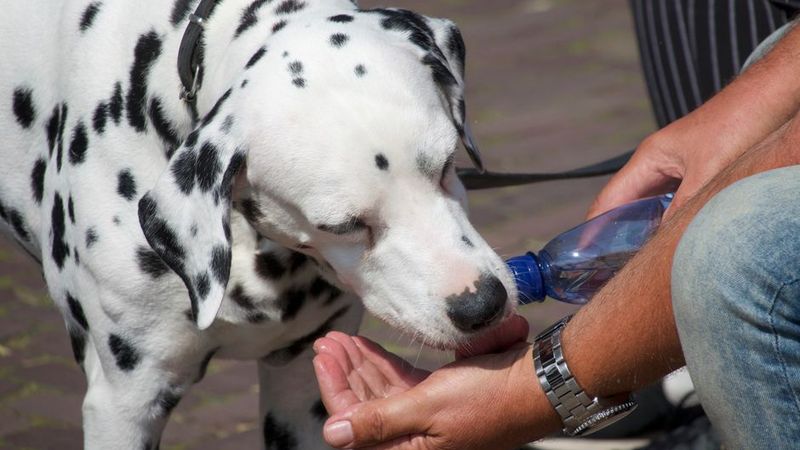
Dogs can't cool themselves the way people do. They rely mostly on panting and, to a lesser extent, sweating through their paw pads, which is far less efficient than sweating all over the skin. That makes summer heat a real daily consideration, not just an occasional concern on the hottest day of the year.
Most heat-related problems in dogs come from a handful of predictable situations: too-hot pavement, parked cars, exercise at the wrong time of day, and not enough water or shade. Each one is straightforward to manage once you know to look for it.
Hot Pavement and Paw Safety
Asphalt and dark pavement absorb heat and can reach temperatures far higher than the air above them, enough to burn paw pads in a matter of minutes on a sunny day. A simple test before a walk: press the back of your hand to the pavement and hold it there for several seconds. If it's too hot for your hand, it's too hot for your dog's paws.
Stick to grass or shaded routes during the warmest parts of the day, and consider walking earlier in the morning or later in the evening when pavement has had time to cool. Dog booties are an option for dogs that tolerate wearing them, though many dogs need gradual practice to get used to the feel before they'll walk normally in them. Watch for limping, refusing to walk, or lifting a paw repeatedly, which can signal the pavement is already too hot.
Cars Are Never Safe, Even for a Minute
A parked car heats up far faster than most people expect, and cracking the windows doesn't meaningfully slow that process. Temperatures inside a car can climb to dangerous levels within minutes on a warm day, even one that doesn't feel extreme outside. There is no errand short enough to justify leaving a dog alone in a parked car during warm weather.
If you're running errands that don't allow dogs inside, leave your dog at home instead of bringing them along for the ride. This single habit prevents more heat emergencies than almost any other precaution on this list.
Timing Exercise Around the Heat
Shift exercise and walks to the coolest parts of the day during summer: early morning and after sunset generally work better than midday or mid-afternoon. Humidity matters as much as temperature, since high humidity makes it harder for a dog to cool down through panting even when the air temperature itself isn't at its peak.
Scale back intensity and duration on hot or humid days rather than keeping the same routine year-round. A dog that normally handles a long run in cooler weather may need that swapped for a shorter, shadier walk, or indoor play, when the heat index is high. Watch for early signs of overexertion, like heavy panting that doesn't settle with rest, slowing down, or wanting to lie down mid-walk, and treat those as a signal to head home and cool down, not push through.
Water, Shade, and Cooling
Fresh water should be available at all times, both at home and during outings, and it's worth carrying extra water and a collapsible bowl on any walk longer than a quick trip around the block in warm weather. Shade matters just as much outdoors, whether that's natural shade from trees, a shaded patio area, or a covered spot if your dog spends any time in a yard.
| Cooling approach | When it helps |
|---|---|
| Cooling mats or vests | Dogs who spend time outdoors or in warm rooms without strong air conditioning |
| Wetting paws, belly, and ears with cool (not ice-cold) water | After exercise or when a dog seems overheated but not in distress |
| Access to indoor air conditioning or a fan | Any dog during the hottest stretch of the day, especially heat-sensitive breeds |
| Frozen treats or ice cubes in water | Encouraging extra water intake on hot days |
Heat-Sensitive Breeds
Some breeds carry extra heat risk by design. Brachycephalic, or flat-faced, breeds like the Bulldog, French Bulldog, Pug, and Boston Terrier have shortened airways that make panting, their main cooling method, less efficient, which raises their risk of overheating even in moderate warmth. Thick-coated breeds built for cold climates, such as the Siberian Husky and Bernese Mountain Dog, also tend to tolerate heat less comfortably despite not sharing the brachycephalic airway issue.
Overweight dogs, senior dogs, puppies, and dogs with existing heart or respiratory conditions carry extra risk in hot weather regardless of breed. If you own a heat-sensitive breed or a dog with any of these risk factors, treat the general precautions in this guide as non-negotiable rather than optional, and lean toward shorter, cooler outings even when the forecast seems only moderately warm. If you're still deciding on a breed with climate in mind, compare breeds side by side to see how climate tolerance varies before you choose.
Recognizing When It's an Emergency
Heatstroke is a medical emergency, not something to manage at home. Signs can include heavy panting that doesn't ease up, bright red gums or tongue, drooling, vomiting, stumbling, or collapse. If you see these signs, this is not a situation for home remedies or waiting to see if it passes.
Get your dog to a veterinarian or emergency animal hospital immediately. On the way, you can move your dog to a cool area and offer water if they're alert and able to drink, but don't delay getting professional care while trying to manage it yourself. Heatstroke can escalate quickly, and prompt veterinary treatment makes a real difference in outcome.
Common mistakes
- Leaving a dog in a parked car for even a few minutes with the windows cracked.
- Walking on hot pavement during peak afternoon heat without checking the surface temperature first.
- Keeping the same exercise routine through summer without scaling back on hot or humid days.
- Underestimating heat risk for brachycephalic breeds because the day doesn't feel extreme to a person.
- Waiting to see if heatstroke symptoms pass instead of seeking emergency veterinary care right away.
Frequently asked questions
How hot does it need to be before pavement is dangerous for paws?
Pavement can become too hot well before the air temperature feels extreme to a person. A quick test is pressing your hand to the pavement; if it's uncomfortable for your hand after a few seconds, it's too hot for paws.
Which dog breeds are most at risk in hot weather?
Brachycephalic, or flat-faced, breeds like Bulldogs, French Bulldogs, Pugs, and Boston Terriers face the highest risk because their shortened airways make panting less effective. Thick-coated breeds built for cold climates also tolerate heat poorly.
Is it ever okay to leave a dog in a parked car for a few minutes in summer?
No. Car interiors heat up quickly even with windows cracked, and there is no errand short enough to make this safe during warm weather.
What should I do if I think my dog has heatstroke?
Treat it as a medical emergency and get to a veterinarian or emergency animal hospital immediately. You can move your dog to a cool area on the way, but don't delay professional care.