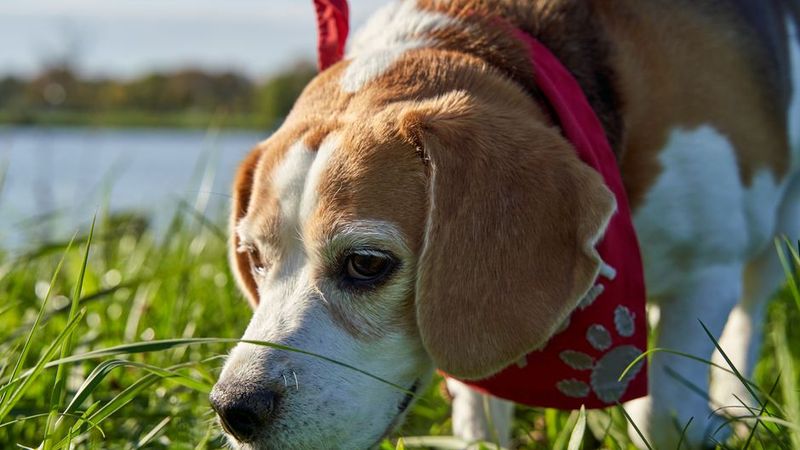
The AKC Hound group includes breeds as different in appearance as the short-legged Dachshund and the towering Greyhound, which makes the group confusing at first glance. What unites them is not size or shape but function: every Hound was bred to pursue game independently, without constant direction from a hunter, unlike Sporting breeds that work closely with a handler.
Within that shared independence, there's a real functional split that matters far more for daily life than the group label itself. Scent hounds like the Beagle, Basset Hound, and Dachshund track prey by smell, often over long distances and long stretches of time. Sighthounds like the Greyhound, Whippet, and Rhodesian Ridgeback hunt by sight and raw speed, covering ground in short, explosive bursts.
This article breaks down that split and what it actually means for recall, prey drive, and the shape of a typical day with each type.
Scent Hounds: A Nose That Overrides Everything Else
Scent hounds were bred to follow a trail by smell and keep following it, sometimes for miles, regardless of what else is happening around them. The Beagle is the clearest example: bred to hunt rabbits in packs, it has a nose sensitive enough to pick up a scent trail and a baying bark loud enough to alert hunters once it's on one. The Basset Hound does similar work at a slower pace, built low to the ground to work scent trails close to the earth. The Dachshund was bred to go underground after badgers, which explains both its tunnel-shaped body and its surprising tenacity for its size.
The practical consequence is that once a scent hound locks onto a trail, its attention narrows almost entirely onto that scent. Calling a Beagle back mid-trail often does not work, not because the dog is being defiant, but because the nose is, in a real sense, running the show at that moment.
Sighthounds: Speed in Short Bursts
Sighthounds hunt by sight and speed rather than scent, which produces a very different daily rhythm. The Greyhound is built almost entirely for a short, explosive sprint, historically used to chase hares across open ground, and despite its racing reputation, it's often a surprisingly calm, couch-oriented dog indoors once that sprint energy is spent. The Whippet is essentially a smaller version of the same design: short bursts of speed followed by long stretches of rest. The Rhodesian Ridgeback, originally used in parts of Africa to track and hold large game at bay until a hunter arrived, combines sighthound speed with more size and independence.
For sighthounds, the trigger for a full sprint is almost always visual: a running rabbit, a cyclist, another dog moving fast, a plastic bag blowing across a yard. A sighthound that seems perfectly obedient at a walk can take off the instant something fast catches its eye, which is why off-leash reliability is a genuine concern for this type, not just scent hounds.
Comparing Recall and Containment Needs
Both types challenge standard containment and recall expectations, but for different reasons, which matters when deciding on fencing or leash habits.
| Breed | Type | Main trigger | Containment note |
|---|---|---|---|
| Beagle | Scent hound | A scent trail | Needs secure fencing; a nose-locked Beagle will dig or squeeze through gaps to follow a trail |
| Basset Hound | Scent hound | A scent trail | Lower energy overall, but the same nose-driven wandering risk applies |
| Dachshund | Scent hound | A scent trail or burrow | Small size means it can slip through small gaps most fences allow |
| Greyhound | Sighthound | Fast visual movement | Needs a tall, secure fence; can clear low barriers and outrun almost anything on foot |
| Whippet | Sighthound | Fast visual movement | Same sprint risk as the Greyhound, in a smaller, equally fast package |
| Rhodesian Ridgeback | Sighthound | Fast visual movement or large animals | Strong-willed; benefits from an experienced handler and secure fencing |
Temperament and Family Fit Across the Split
Temperament doesn't split as cleanly along scent-versus-sight lines as prey drive does, but there are patterns. Breed data shows the Beagle scoring at the top of the child-friendly scale, reflecting its history as a social pack-hunting breed used to working alongside other dogs and people. The Basset Hound and Dachshund also score reasonably well with children, though the Dachshund's long spine makes rough handling by small kids a real injury risk worth managing directly.
Sighthounds tend to be quieter and less demonstrative than their racing reputation suggests. The Greyhound and Whippet both score very low on barking, and both are often described as gentle, low-drama housemates once their exercise needs are met. The Rhodesian Ridgeback is more independent and reserved, and breed data notes it benefits from an experienced, consistent handler rather than a first-time owner.
Exercise: Steady Miles vs. Short Sprints
The two types also want very different kinds of exercise, which is easy to miss if you only look at an overall exercise score. Scent hounds like the Beagle benefit from scent-based activities: nose work games, long walks that let them sniff freely, or tracking exercises that use the instinct rather than fight it. A bored scent hound with no outlet for its nose often finds its own outlet, usually by following a smell straight out of the yard.
Sighthounds need the opposite: a safe space to run flat-out, even if only for ten or fifteen minutes a day, rather than long, steady miles. A securely fenced yard or a trip to a fenced dog park where a Greyhound or Whippet can actually open up its stride matters more than distance walked. Both the Greyhound and Whippet have fairly low cold tolerance given their thin coats and low body fat, so a sprint session on a cold day may call for a coat afterward.
Choosing Between Scent Hound and Sighthound Traits
Deciding between the two types comes down to which daily behavior pattern fits your household better. A scent hound suits someone who enjoys walks with lots of sniffing time and who can secure a yard against digging and gap-squeezing. A sighthound suits someone who can provide short bursts of safe, open-space running and who doesn't mind a dog that's otherwise fairly sedentary indoors. If you're weighing a specific scent hound against a specific sighthound, you can compare breeds side by side to see exercise, barking, and apartment-fit scores next to each other directly.
Neither type is inherently easier than the other; they're just different shapes of the same core trait, independent pursuit of game, carried over from their original jobs into modern household life.
Common mistakes
- Expecting a scent hound to return on command once it's locked onto a trail; the nose often overrides training in that moment.
- Underestimating a sighthound's top speed and assuming a standard fence height is enough containment.
- Giving a scent hound long walks with no sniffing time, then being surprised when it finds its own scent-based outlet by escaping.
- Assuming all Hounds are loud; sighthounds like the Greyhound and Whippet are actually among the quietest breeds in breed data.
- Letting small children handle a Dachshund roughly without supervision, given the injury risk to its elongated spine.
Frequently asked questions
What's the difference between a scent hound and a sighthound?
Scent hounds, like the Beagle and Basset Hound, track game by smell, often over long distances. Sighthounds, like the Greyhound and Whippet, hunt by sight and speed in short, fast bursts. Both are AKC Hound group breeds, but the hunting method shapes very different daily behavior.
Are Hound breeds good with recall off-leash?
Generally not reliable. Scent hounds can get absorbed in a trail and ignore calls, and sighthounds can bolt after fast visual movement. Secure fencing and a long leash in open areas are safer than relying on off-leash recall.
Which Hound breeds are quietest?
Sighthounds tend to be the quietest. Breed data shows the Greyhound and Whippet both scoring very low on barking, in contrast to vocal scent hounds like the Beagle and Dachshund.
Do sighthounds need a lot of exercise?
They need intense but short exercise, not long mileage. A daily chance to sprint safely in a secure space matters more than distance, and most sighthounds are calm, low-energy dogs indoors between those bursts.
Why do scent hounds dig or escape fenced yards?
A scent hound following an interesting trail is acting on strong instinct, not disobedience. Secure, gap-free fencing and supervised outdoor time reduce the risk of a scent-driven escape.