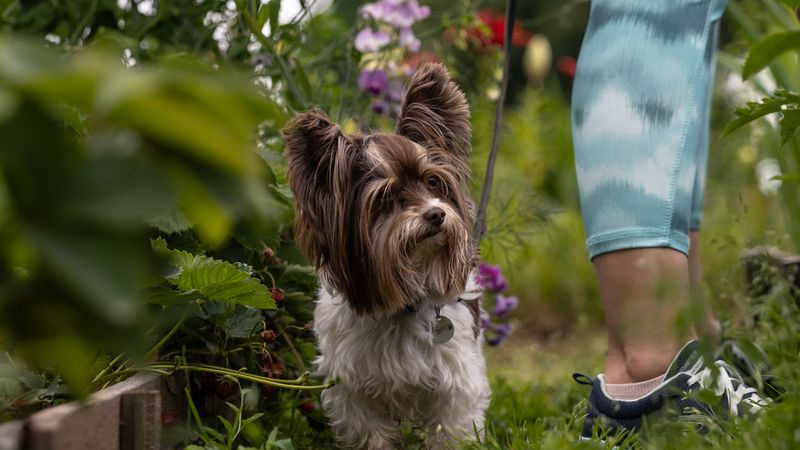
Terriers were bred to hunt and kill rats, foxes, badgers, and other vermin, usually by going after them in tight spaces: burrows, dens, barns, and farm buildings. That job is the root of almost every trait people notice about Terriers today, from their tendency to dig to their famously stubborn streak during training.
The name itself comes from the Latin terra, meaning earth, a nod to how many of these breeds worked underground. Unlike Sporting breeds, which needed to stay in close contact with a hunter, Terriers often worked alone in a hole where no handler could see or direct them. That demanded a dog that could make its own decisions fast, which is exactly the trait that makes Terriers so distinct from more handler-dependent groups.
This article covers what that vermin-hunting background means for daily life, using real AKC and UKC Terrier breeds as examples.
Bred to Decide, Not Just Obey
A Terrier chasing a rat into a burrow had no time to wait for instructions. It needed to track, corner, and often kill its quarry entirely on its own judgment, in a space too small for a human to help. That selection pressure produced a group of breeds that are smart but not especially eager to simply follow orders, which is a real contrast to Sporting breeds bred for the opposite trait.
Breed data reflects this clearly in trainability scores. The Scottish Terrier scores a 2 out of 5 on trainability, and its entry notes it is known for a strong sense of its own mind, with training rewarding patience and consistency rather than quick results. The Bull Terrier scores similarly low, described as strong-willed and benefiting from firm, reward-based training started early. This independence is not defiance for its own sake; it's a direct carryover from a job that required the dog to think for itself.
Digging and Prey Drive at Home
Because so many Terriers were bred to go after burrowing animals, digging is close to a default behavior rather than a bad habit to correct out of nowhere. The Jack Russell Terrier is the clearest modern example: bred specifically to go underground after fox and other quarry, breed data notes its high prey drive and digging instincts need a securely fenced space, and it carries the top exercise score of 5 out of 5 in the group.
This shows up in ordinary backyards as holes under fences, dug-up flower beds, and intense interest in squirrels, rabbits, or anything small and fast-moving. It's rarely something that disappears with training alone. Many Terrier owners manage it instead, by providing a designated digging spot, supervising yard time, and using flirt poles or similar toys that let the dog chase something in a controlled way.
Size Varies More Than People Expect
Terriers get stereotyped as small dogs, but the group actually spans a wide size range, and that matters for strength and handling, not just living space. The table below shows the spread.
| Breed | Weight | Exercise (1-5) | Note |
|---|---|---|---|
| Jack Russell Terrier | 13-17 lb (6-8 kg) | 5 | Small but intensely energetic; strong digger |
| Miniature Schnauzer | 11-20 lb (5-9 kg) | 3 | Alert, vocal, wiry low-shed coat |
| West Highland White Terrier | 15-20 lb (7-9 kg) | 3 | Harsh double coat needs regular stripping |
| Scottish Terrier | 18-22 lb (8-10 kg) | 3 | Independent, dignified, low trainability score |
| Bull Terrier | 50-70 lb (23-32 kg) | 4 | Muscular, playful, can be stubborn |
| Airedale Terrier | 50-70 lb (23-32 kg) | 4 | Largest Terrier breed, nicknamed the King of Terriers |
A Bull Terrier or Airedale Terrier is a genuinely strong, mid-to-large dog, not the small, portable companion the group's reputation might suggest, and handling one on leash through a strong pull takes real physical effort.
Vocal Habits and Apartment Living
Terriers tend to be alert and quick to sound an alarm, a trait that made sense for a farm dog meant to flag vermin activity but can be a real issue in close living quarters. Breed data scores the Jack Russell Terrier and Miniature Schnauzer both at 4 out of 5 on barking, and the Scottish Terrier and West Highland White Terrier at 3 out of 5. None of these are quiet breeds by default.
Apartment fit scores vary correspondingly. The Miniature Schnauzer and West Highland White Terrier both score a relatively high 4 out of 5 on apartment fit, suggesting they can adapt well to smaller spaces, but a thin wall and a vocal Terrier are still a combination worth planning for with noise training early, rather than hoping it resolves on its own.
Grooming: Wiry Coats Need More Than They Look
Several Terrier breeds carry a distinctive wiry double coat that looks low-maintenance but actually needs regular, specific care. The Airedale Terrier, West Highland White Terrier, Scottish Terrier, and Miniature Schnauzer all score 4 out of 5 on grooming despite scoring very low, often 1 out of 5, on shedding. The reason is hand-stripping or clipping: a wiry coat needs to be pulled or trimmed on a schedule to keep its texture and color, and skipping that maintenance leads to a dull, overgrown coat rather than visible shedding around the house.
This is a case where low shedding does not mean low grooming effort, a distinction that surprises first-time Terrier owners who assume the two always move together.
Matching a Terrier to Your Household
Terriers suit owners who want an alert, confident, entertaining dog and who are prepared for an independent streak during training rather than instant obedience. A securely fenced yard matters more here than in almost any other group, given the digging and prey drive involved. Households with small pets like rabbits, hamsters, or free-roaming cats should think carefully before adding a high-prey-drive Terrier, since the instinct to chase small, fast-moving animals is a core, bred-in trait, not a quirk.
If you're deciding between a small Terrier and a Toy breed that looks similar in size, the daily experience can be very different; you can compare breeds side by side to see trainability, barking, and exercise scores next to each other before deciding.
Common mistakes
- Expecting a Terrier to train as quickly or eagerly as a Sporting breed; independence is a core trait, not a training failure.
- Assuming a low-shedding wiry coat means low grooming effort; many Terriers need regular hand-stripping or clipping instead.
- Underestimating the strength of mid-to-large Terriers like the Bull Terrier and Airedale Terrier on leash.
- Adding a high-prey-drive Terrier to a household with small pets like rabbits or hamsters without a careful introduction plan.
- Ignoring digging behavior as a discipline problem rather than managing it as a bred-in instinct.
Frequently asked questions
What breeds are in the Terrier group?
Examples include the Jack Russell Terrier, Bull Terrier, Airedale Terrier, West Highland White Terrier, Scottish Terrier, and Miniature Schnauzer. Most AKC Terriers are recognized by the AKC, though the Jack Russell Terrier is recognized by the UKC rather than the AKC.
Why do Terriers dig so much?
Many Terriers were bred to pursue burrowing animals like foxes, badgers, and rats underground. Digging is a direct extension of that original job, not simply a behavior problem to train away.
Are Terriers good with small pets?
Often not without careful management. High prey drive is common across the group, and small, fast-moving pets like rabbits or hamsters can trigger strong chase instincts.
Are Terriers easy to train?
Some are more trainable than others, but as a group they tend to be more independent than Sporting or Herding breeds, scoring lower on trainability in breed data. Patience and consistency matter more than quick-fix methods.
Do Terriers do well in apartments?
It depends on the breed. The Miniature Schnauzer and West Highland White Terrier score well on apartment fit, but most Terriers are vocal, so noise habits need attention in close living situations.