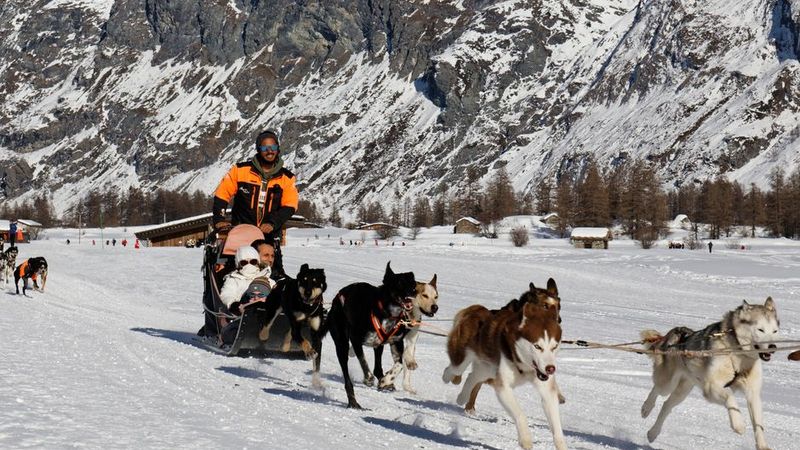
The AKC Working group is a catch-all for breeds bred to perform physical labor for people: guarding property, pulling sleds and carts, rescuing people from water or snow, and hauling loads over long distances. It's one of the most varied groups in terms of job history, but the breeds inside it tend to share two traits regardless of their specific original task: real physical size and a need for a confident, consistent owner.
This group includes some of the largest dogs recognized by the AKC, from the Great Dane to the Saint Bernard, alongside guardian breeds like the Rottweiler and Doberman Pinscher and cold-climate workers like the Siberian Husky. Because the jobs varied so much, the group's temperament range is wide, but the practical demands of owning a large, strong, purpose-bred dog stay fairly consistent across almost every breed in it.
This article looks at what the original Working jobs mean for size, training, space, and daily life now.
Four Original Jobs, One Group
The Working group covers at least four distinct original roles. Guardian breeds, like the Rottweiler, Doberman Pinscher, and Boxer, were bred to protect property, livestock, or people, which selected for alertness, confidence, and a willingness to act without constant direction. Sled and draft breeds, like the Siberian Husky, were bred for sustained pulling power and cold-weather endurance. Rescue breeds, like the Saint Bernard and Newfoundland, were bred to find and physically assist people in danger, in snow or in water. Guard-and-companion mountain breeds, like the Bernese Mountain Dog, combined farm guarding with cart-pulling in Alpine regions.
The Akita, originally used in Japan for hunting large game and later as a guardian and companion breed, adds another variation: independence paired with strong loyalty to its own household rather than people in general. None of these jobs required a small or delicate dog, which is the one thing nearly every breed in this group has in common.
Size: The First Thing to Plan For
Working breeds skew large, and some are genuinely giant. Breed data puts the Great Dane at 110 to 175 lb (50 to 79 kg) and the Saint Bernard at 120 to 180 lb (54 to 82 kg), with the Newfoundland close behind at 100 to 150 lb (45 to 68 kg). Even the mid-sized breeds in the group, like the Boxer at 50 to 80 lb (23 to 36 kg) and the Doberman Pinscher at 60 to 100 lb (27 to 45 kg), are substantially bigger than the average Sporting or Herding breed.
Size changes the stakes of everyday mistakes. A poorly trained 15 lb dog that jumps on guests is an annoyance. A poorly trained 120 lb Saint Bernard doing the same thing can knock an adult over. That's not a reason to avoid this group, but it is a reason to take training seriously from the start, since the cost of skipping it scales directly with the dog's size and strength.
Guardian Breeds Need Structured Socialization
Guardian breeds in particular benefit from early, deliberate socialization, and breed data flags this directly. The Rottweiler's entry notes it benefits strongly from early, consistent socialization and obedience work, and the Akita's notes that it can be reserved or assertive with unfamiliar dogs, making early socialization important. The Doberman Pinscher scores at the top of the trainability scale, which helps, but its guarding instincts still need deliberate shaping rather than being left to develop on their own.
This isn't about these breeds being inherently dangerous. It's about the fact that a dog bred to assess strangers and act independently needs a structured introduction to the world, ideally starting in puppyhood, so that its protective instincts land on real threats rather than ordinary visitors, delivery workers, or other dogs at the park.
Cold-Climate Breeds and the Heat Problem
Several Working breeds were built for cold weather, and that same build becomes a liability in heat. The Siberian Husky, Bernese Mountain Dog, Saint Bernard, and Newfoundland all carry thick double coats suited to Arctic or Alpine conditions, and breed data scores all of them low on climate tolerance for exactly this reason. A Husky or Newfoundland left in direct summer sun without shade and water is at real risk of overheating, regardless of how much energy it seems to have.
On the other end, breeds like the Boxer and Doberman Pinscher have short coats that offer little protection in genuinely cold weather, and the Boxer's short muzzle also makes it more sensitive to heat during strenuous exercise. Matching a Working breed's coat type to your actual climate, not just your available space, is worth checking before committing to one.
Space and Exercise Needs by Breed
Exercise needs vary more across this group than people expect, since some Working breeds were bred for sustained labor and others for more intermittent tasks. The table below shows the spread.
| Breed | Exercise need (1-5) | Apartment fit (1-5) | Original job |
|---|---|---|---|
| Siberian Husky | 5 | 1 | Sled pulling |
| Boxer | 5 | 2 | Guarding, working companion |
| Doberman Pinscher | 5 | 1 | Guarding, personal protection |
| Rottweiler | 4 | 1 | Guarding, droving cattle |
| Great Dane | 3 | 2 | Estate guarding, large-game hunting |
| Bernese Mountain Dog | 3 | 1 | Farm guarding, cart-pulling |
| Saint Bernard | 2 | 1 | Alpine rescue |
| Newfoundland | 3 | 1 | Water rescue, hauling |
Almost every breed in this list scores low on apartment fit, not always because of exercise needs but often simply because of size: even a calm giant breed like the Saint Bernard needs floor space to turn around and stretch out comfortably.
Life Expectancy and Giant-Breed Health Considerations
One pattern worth planning for is a shorter lifespan among the largest Working breeds. Breed data lists the Great Dane at 8 to 10 years and the Saint Bernard and Rottweiler both at 8 to 10 years, noticeably shorter than mid-sized breeds elsewhere in the group like the Boxer or Doberman Pinscher at 10 to 12 and 10 to 13 years respectively. This is a documented pattern across giant breeds generally and is worth discussing with a veterinarian rather than treating as a certainty for any individual dog.
Large-breed joint health is also a longer-term consideration with giant breeds like the Great Dane, since their size puts more stress on joints over a lifetime. This article isn't the place for medical guidance, but it's a good reason to ask a veterinarian about breed-specific care early rather than after a problem appears.
Who Does Well With a Working Breed
The Working group fits owners with the space, physical strength, and consistency to manage a large, strong dog through adolescence and beyond. That includes people with a yard rather than a small apartment, people comfortable committing to structured training classes, and people prepared for a cold-climate breed's heat sensitivity or a guardian breed's socialization needs. If you're deciding between a guardian breed and a giant companion breed, you can compare breeds side by side to see how their exercise, trainability, and apartment-fit scores actually differ.
This group is a poor fit for first-time owners who want a low-effort dog, or for small living spaces without a realistic plan for daily exercise and training.
Common mistakes
- Underestimating how much a 100+ lb adult dog changes the consequences of basic training gaps, like jumping on guests.
- Skipping early socialization with guardian breeds, which can make normal visitors or other dogs harder for the dog to read correctly.
- Leaving a cold-climate breed like a Husky or Newfoundland without shade and water on hot days because its energy level seems fine.
- Assuming all Working breeds need the same amount of exercise; a Saint Bernard and a Doberman Pinscher have very different daily needs.
- Choosing a giant breed for a small apartment without weighing the lack of space to stretch out and move around comfortably.
Frequently asked questions
What breeds are in the AKC Working group?
Examples include the Siberian Husky, Boxer, Great Dane, Doberman Pinscher, Rottweiler, Bernese Mountain Dog, Saint Bernard, Akita, and Newfoundland. The group covers guarding, sledding, rescue, and draft work.
Are Working group breeds good for first-time owners?
Some can be, particularly mid-sized, highly trainable breeds, but most benefit from an owner with experience handling a large or strong-willed dog. Guardian breeds especially need consistent, structured training from early on.
Why do some Working breeds have shorter lifespans?
Giant breeds like the Great Dane and Saint Bernard tend to have shorter average lifespans than mid-sized dogs, a pattern seen broadly across large breeds. A veterinarian can speak to the specifics for any individual dog.
Can a Working breed live in an apartment?
It's difficult for most breeds in this group. Breed data shows low apartment-fit scores across nearly the entire group, driven by a combination of size and, for several breeds, high exercise needs.
Do all Working breeds need heavy coat care?
No. Short-coated breeds like the Boxer and Doberman Pinscher need very little grooming, while thick-coated breeds like the Bernese Mountain Dog and Newfoundland need regular brushing and shed heavily.