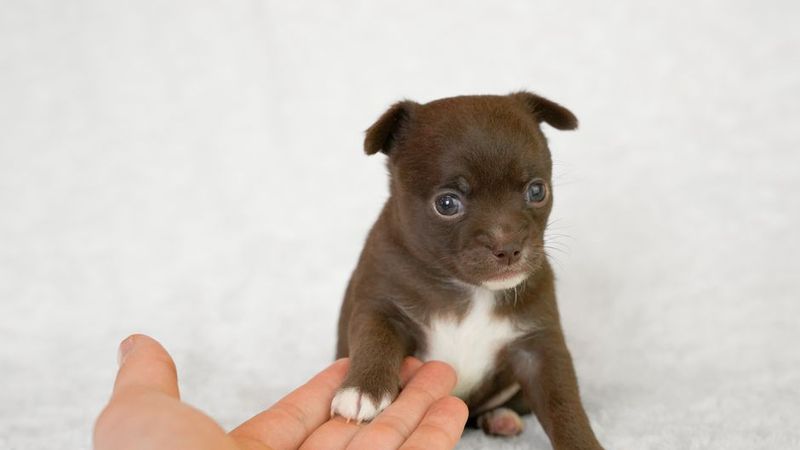
The AKC Toy group is organized almost entirely around size rather than a shared original job. Most of these breeds, including the Chihuahua, Pomeranian, Shih Tzu, Yorkshire Terrier, Maltese, Papillon, and Cavalier King Charles Spaniel, were bred primarily for companionship, which makes the group an outlier compared to Sporting, Herding, or Terrier breeds built around a working task.
That companionship-first history leads to a common misconception: that small size equals low effort. In practice, several Toy breeds need just as much training, socialization, and exercise as much larger dogs, and some carry heavier grooming demands than anything in the Working or Sporting groups. Small size changes what a dog needs physically, but it doesn't eliminate what a dog needs behaviorally.
This article looks at what actually varies across the Toy group and where the small-and-easy assumption tends to break down.
Small Size, Not Small Needs
The clearest myth to correct about Toy breeds is that their size means they need less from an owner. Training is the biggest gap. The Papillon, for example, scores a 5 out of 5 on trainability in breed data and is noted for often excelling at obedience and agility despite its small, delicate frame, which means it genuinely wants and benefits from structured training, not just basic house manners.
On the other end, the Shih Tzu scores a 2 out of 5 on trainability, a reminder that trainability varies across the group just as much as it does in larger breeds, and that assuming any small dog will be naturally easy to train is a mistake regardless of direction. Socialization also matters: a Toy breed that never learns to tolerate handling, strangers, or other dogs can become reactive or anxious, a problem that is just as real in a 5 lb dog as a 50 lb one, even if it's easier to physically manage.
The Grooming Surprise
Grooming is where the small-equals-easy assumption breaks down most dramatically. The Shih Tzu, Yorkshire Terrier, and Maltese all score a 5 out of 5 on grooming in breed data, the highest possible score, despite being some of the smallest breeds in the group. The Shih Tzu's long, flowing coat mats quickly without daily brushing or a short, maintained clip, and the Maltese's entry notes that tear staining and coat matting are routine, ongoing concerns. The Yorkshire Terrier's silky, glossy coat has similar upkeep demands.
The table below compares grooming and shedding scores across several Toy breeds to show just how much this varies within the group.
| Breed | Grooming score (1-5) | Shedding score (1-5) | Coat note |
|---|---|---|---|
| Chihuahua | 1 | 2 | Short coat, minimal upkeep |
| Pug | 1 | 3 | Short coat but sheds steadily |
| Cavalier King Charles Spaniel | 3 | 3 | Feathered coat needs regular brushing |
| Pomeranian | 4 | 4 | Thick double coat sheds more than its size suggests |
| Yorkshire Terrier | 5 | 1 | Silky coat mats without daily care |
| Maltese | 5 | 1 | Long white coat, prone to matting and tear staining |
| Shih Tzu | 5 | 1 | Long coat mats quickly without daily brushing |
A low shedding score does not mean low grooming effort for several of these breeds; it often means the opposite, since a coat that doesn't shed out on its own needs more active maintenance to stay healthy.
Exercise: Lower, But Not Zero
Most Toy breeds score low on exercise need, generally 2 or 3 out of 5, which is a genuine advantage for apartment dwellers or less physically active owners. But low does not mean none. The Papillon, for instance, scores a 3 out of 5, higher than several other Toy breeds, and still benefits from regular play and short training sessions to stay mentally satisfied.
Even the lowest-exercise Toy breeds need daily movement and mental stimulation. A dog that doesn't need a long run can still become bored, anxious, or prone to attention-seeking behaviors like excessive barking without any outlet at all. Short walks, indoor play, and puzzle toys usually cover the need, but skipping exercise altogether because a dog is small is a common and avoidable mistake.
Fragility and Handling Around Children
Physical fragility is a real consideration with several Toy breeds that doesn't apply the same way to larger dogs. Breed data flags the Yorkshire Terrier directly: fine bones make rough handling by young children a real injury risk. The Chihuahua and similarly tiny breeds carry the same concern simply due to their small frame and light bone structure.
This cuts against another common assumption, that small dogs are automatically a safer choice for families with young kids. In some cases the opposite is true: a larger, sturdier breed can tolerate a toddler's clumsy handling better than a 4 lb Chihuahua or Yorkshire Terrier can. Breeds like the Cavalier King Charles Spaniel and Pug, both scoring a 5 out of 5 on child-friendliness in breed data, tend to be a better match for boisterous young kids than the tiniest Toy breeds.
Climate Sensitivity in Small Bodies
Small body mass means less insulation and less heat retention, which shows up clearly in climate tolerance scores. The Chihuahua and Pug both score a 1 out of 5 on climate tolerance, and breed data notes the Chihuahua chills quickly, often needing a sweater or coat outdoors in winter. The Pug's short muzzle adds a separate heat-related risk: its brachycephalic airway means real risk of overheating, so exercise should stay light in hot weather regardless of the dog's size.
Owners in climates with cold winters or hot, humid summers should check a specific breed's climate tolerance rather than assuming small size is purely a convenience with no downside.
Choosing a Toy Breed With Eyes Open
The Toy group works well for apartment living, for owners with limited physical mobility, and for people who want a dog they can take almost everywhere. It does not work well for anyone expecting to skip training, grooming, or exercise simply because the dog is small. If you're weighing two Toy breeds that look similar on the surface, like a Maltese against a Shih Tzu, you can compare breeds side by side to see how differently their trainability and grooming needs actually stack up.
Matching the right Toy breed to a household means looking past size entirely and checking trainability, grooming, and child-friendliness scores the same way you would for any larger breed.
Common mistakes
- Assuming small size means minimal grooming; several Toy breeds, like the Shih Tzu and Maltese, need daily brushing to avoid matting.
- Skipping training and socialization because a dog is small enough to carry or manage physically without it.
- Choosing the tiniest Toy breed for a family with young children without considering the real risk of injury from rough handling.
- Leaving a Toy breed outdoors in cold weather without a coat, assuming its energy level means it's not cold.
- Ignoring exercise needs entirely because the breed's exercise score is low rather than zero.
Frequently asked questions
What breeds are in the AKC Toy group?
Examples include the Chihuahua, Pomeranian, Pug, Shih Tzu, Yorkshire Terrier, Maltese, Papillon, and Cavalier King Charles Spaniel. Most were bred primarily as companions rather than for a specific working task.
Are Toy breeds low-maintenance?
Not necessarily. Several Toy breeds, including the Shih Tzu, Maltese, and Yorkshire Terrier, need daily grooming to prevent matting, and trainability varies widely across the group.
Are Toy breeds good with kids?
It depends on the specific breed and the children's age. Some, like the Cavalier King Charles Spaniel, score well for child-friendliness, while very small, fine-boned breeds like the Yorkshire Terrier carry real injury risk from rough handling by young kids.
Do Toy breeds need exercise?
Yes, though generally less than larger breeds. Most score low on the exercise scale but still need daily movement and mental stimulation to avoid boredom-driven behaviors.
Why do some small Toy breeds need coats in winter?
Smaller body mass retains less heat, and some breeds like the Chihuahua have thin coats on top of that. Breed data notes several Toy breeds need a sweater or coat outdoors in cold weather.