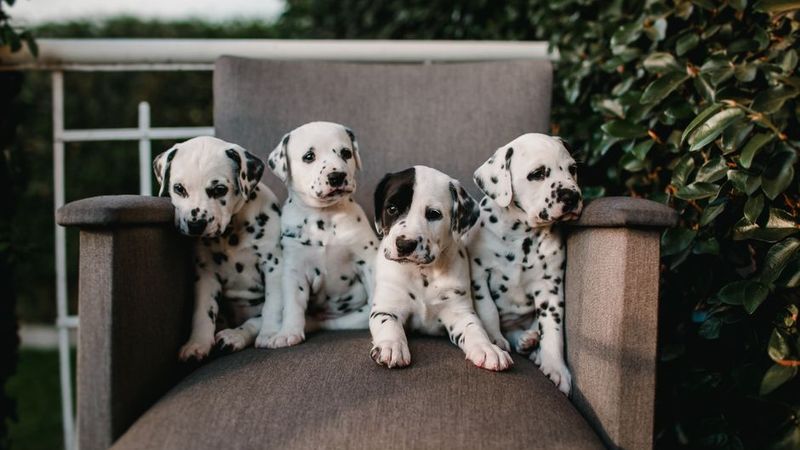
Six of the seven AKC groups are organized around a shared original job: Sporting breeds retrieved birds, Herding breeds moved livestock, Terriers hunted vermin. The Non-Sporting group breaks that pattern entirely. It's the AKC's catch-all category, home to breeds that don't fit cleanly into any of the other six, which means its members share almost nothing in terms of history or purpose.
The Bulldog, French Bulldog, Standard Poodle, Boston Terrier, Dalmatian, Chow Chow, and Shiba Inu all sit in this group, and their original jobs range from bull-baiting to carriage-running to serving as an all-purpose Japanese hunting companion. Some, like the Poodle, were originally working retrievers reclassified here rather than in Sporting. Others were companions from the start.
This article explains why the group exists as a catch-all, what that means practically when comparing its breeds, and what each example breed's actual background looks like.
Why a Catch-All Group Exists at All
Kennel clubs need somewhere to put breeds that don't match the working categories they've already defined. Rather than inventing a new group for every unusual breed, the AKC created Non-Sporting as a home for breeds that are distinct enough from each other that no shared category quite fits, but too few in number to justify their own separate groups.
This means Non-Sporting is defined by exclusion rather than by a positive shared trait. A breed ends up here because it isn't a gun dog, isn't a hound, isn't a guardian or draft breed, isn't a vermin hunter, isn't a toy companion, and isn't a herder. That's a wide net, which is exactly why the breeds inside it look and behave so differently from one another.
Seven Breeds, Seven Different Histories
The spread of original purposes inside this group is the clearest evidence of its catch-all nature. The Bulldog and French Bulldog both descend from breeds originally used in bull-baiting, a blood sport banned in the 1800s, after which breeders reshaped them into companion dogs with far gentler temperaments. The Boston Terrier was developed in the United States specifically as a companion breed, earning the nickname the American Gentleman.
The Standard Poodle has a working past as a water retriever, historically used to retrieve waterfowl, which is why its curly coat was originally functional rather than decorative. The Dalmatian was historically used to run alongside carriages, a role that demanded real stamina and explains why it still scores a 5 out of 5 on exercise in breed data today. The Chow Chow and Shiba Inu both come from East Asian backgrounds as general-purpose companion and guard breeds, with distinct independent temperaments that set them apart from the rest of the group.
What That Diversity Means for Shopping This Group
Because this group has no shared original job, it has no shared temperament, exercise need, or grooming profile either, which makes it the one AKC group where you genuinely cannot generalize from the group label alone. Comparing two Non-Sporting breeds can mean comparing two dogs as different as a low-exercise Bulldog and a high-exercise Dalmatian.
The table below shows just how wide that spread is on a few key traits.
| Breed | Exercise (1-5) | Trainability (1-5) | Grooming (1-5) | Original role |
|---|---|---|---|---|
| Bulldog | 1 | 2 | 1 | Companion (formerly bull-baiting) |
| French Bulldog | 2 | 3 | 1 | Companion |
| Poodle (Standard) | 4 | 5 | 5 | Water retriever |
| Boston Terrier | 3 | 4 | 1 | Companion |
| Dalmatian | 5 | 3 | 1 | Carriage dog |
| Chow Chow | 2 | 2 | 4 | General-purpose guard and companion |
| Shiba Inu | 3 | 2 | 2 | General-purpose hunting companion |
No other AKC group shows this much range on exercise and trainability scores within just seven example breeds, which is a direct result of having no unifying original job.
The Brachycephalic Thread Through Part of the Group
While there's no single shared history, a few Non-Sporting breeds do share a physical trait worth flagging separately: a short, flat muzzle, known as a brachycephalic build. The Bulldog and French Bulldog both carry this trait, and breed data is direct about the consequence: real heatstroke risk, with both breeds needing exercise or walks avoided in heat or humidity, since they cannot safely regulate body temperature in hot weather.
This is a physical trait that cuts across group lines generally, since Toy group breeds like the Pug share it too, and it has nothing to do with Non-Sporting as a category. It's worth knowing regardless, since it means owners of these two specific Non-Sporting breeds need real caution with summer heat, unlike their higher-exercise groupmate the Dalmatian.
Independent Temperaments in Chow Chow and Shiba Inu
Two Non-Sporting breeds, the Chow Chow and Shiba Inu, stand out for a reserved, independent temperament that doesn't match the group's generally companion-oriented reputation. Breed data scores the Chow Chow at a 2 out of 5 on trainability and a 2 out of 5 on child-friendliness, and notes it has a reserved manner with strangers. The Shiba Inu scores similarly on trainability and is known for a strong independent streak and a distinctive vocal Shiba scream.
Both breeds also carry heavy, double coats that blow out seasonally, adding a grooming workload that doesn't fit the easy-companion-dog assumption some people bring to smaller, East Asian breeds. Anyone drawn to these two specifically should treat them more like an independent Working or Terrier breed in terms of training expectations than like a Boston Terrier or French Bulldog.
Comparing Within a Group That Doesn't Generalize
Because Non-Sporting breeds vary so widely, the group label itself is close to useless for predicting what a specific breed will be like to live with. The only reliable approach is checking each breed's individual exercise, grooming, trainability, and climate-tolerance data rather than leaning on the group the way you might reasonably do with Sporting or Herding breeds. If you're considering two breeds from this group, you can compare breeds side by side to see their individual traits laid out directly, since the group name alone won't tell you much.
This isn't a flaw in the group so much as an honest reflection of its origin: a list of breeds that didn't fit anywhere else, grouped together by elimination rather than by shared purpose.
Common mistakes
- Assuming Non-Sporting breeds share a general temperament or exercise level, when the group actually spans some of the widest trait ranges in the entire AKC system.
- Expecting a brachycephalic breed like the Bulldog or French Bulldog to tolerate heat and exercise the way a Dalmatian can.
- Treating the Chow Chow or Shiba Inu as an easy companion breed without planning for their independence and heavy seasonal coat blowouts.
- Picking a Standard Poodle for low grooming needs; its curly coat needs clipping roughly every six weeks despite minimal shedding.
- Comparing two Non-Sporting breeds by group reputation alone instead of checking each breed's individual data.
Frequently asked questions
What breeds are in the AKC Non-Sporting group?
Examples include the Bulldog, French Bulldog, Standard Poodle, Boston Terrier, Dalmatian, Chow Chow, and Shiba Inu. There's no single original job connecting them.
Why is it called a catch-all group?
Because its breeds don't share one original purpose the way the other six AKC groups do. A breed lands in Non-Sporting mainly because it doesn't fit the Sporting, Hound, Working, Terrier, Toy, or Herding categories.
Is the Poodle a Non-Sporting or Sporting breed?
The Standard Poodle is classified in the AKC Non-Sporting group today, despite its history as a working water retriever. Smaller Poodle varieties are also placed in Non-Sporting.
Are all Non-Sporting breeds low-energy?
No. The Dalmatian scores a 5 out of 5 on exercise in breed data, as high as many Sporting or Herding breeds, while the Bulldog scores a 1 out of 5. Exercise needs vary enormously across this group.
Which Non-Sporting breeds need caution in hot weather?
The Bulldog and French Bulldog both have short muzzles that make heat regulation difficult, and both carry real heatstroke risk in hot or humid conditions.