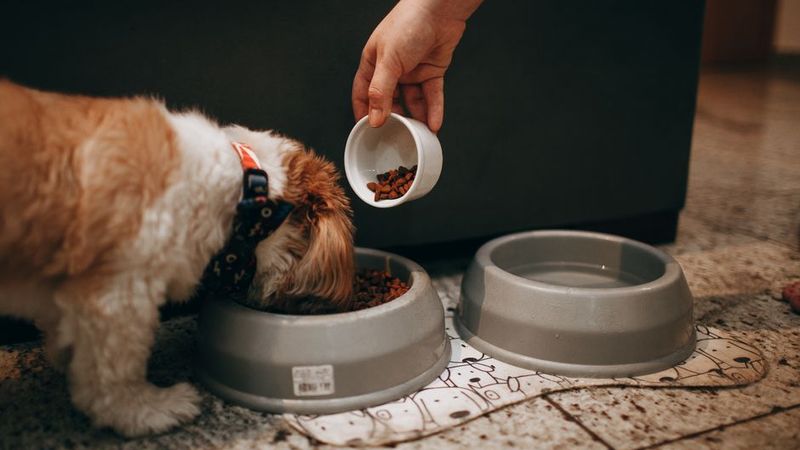
How often a dog eats changes more across its life than almost any other part of its daily routine. A feeding schedule that works perfectly for a ten-week-old puppy would leave most adult dogs overweight, and a schedule built for a three-year-old adult often stops working well once a dog reaches its senior years.
This article covers the timing and structure of meals at each life stage, not specific diets, brands, or portion amounts, since the right food and quantity depend on the individual dog's size, breed, and health. For any question about what to feed or how much, a veterinarian is the right source, since that crosses into medical and nutritional territory this guide does not cover.
Puppy Feeding Patterns
Young puppies have small stomachs and fast metabolisms, so most need more frequent, smaller meals than an adult dog of the same breed. A common pattern is four meals a day from weaning until about twelve weeks old, dropping to three meals a day from roughly three to six months, and then two meals a day from six months onward into adulthood.
Spacing meals evenly through the day, such as morning, midday, afternoon, and early evening for a young puppy, helps keep blood sugar steady and supports consistent bathroom timing, since puppies typically need to go out shortly after eating. Moving from one meal count to the next is usually a gradual shift over a week or two rather than an abrupt change, and timing can flex slightly day to day without causing problems.
Adult Feeding Patterns
Most adult dogs do well on two meals a day, spaced roughly ten to twelve hours apart, such as a morning and an evening meal. Some adult dogs, particularly smaller breeds or dogs prone to a sensitive stomach, do better split into three smaller meals, while a small number of healthy adult dogs do fine on one larger daily meal, though two is the more common and generally more comfortable pattern.
Feeding before or after exercise matters more than most new owners expect. Feeding right before vigorous activity can upset digestion, so many routines build in a rest period of thirty minutes to an hour after a meal before a walk or play session, and a similar gap after hard exercise before the next meal.
Senior Feeding Patterns
Many senior dogs keep the same two-meals-a-day structure they had as adults, but appetite and digestion can shift with age, and some do better moving to smaller, more frequent meals, such as three a day, if a large meal seems to sit poorly. Consistent timing tends to matter more for seniors than for younger adults, since a disrupted schedule shows up faster in a senior dog's energy and bathroom habits.
Weight tends to be easier to lose track of in senior dogs, since activity naturally declines with age; keeping meal sizes and timing consistent, rather than adjusting portions casually day to day, makes it easier to notice a real weight change early. A vet is the right source for adjusting amounts or switching diets as a dog ages.
A Sample Weekly Pattern Across Life Stages
The table below summarizes typical meal counts and spacing by life stage, as a quick reference rather than a strict rule.
| Life stage | Typical meals/day | Typical spacing |
|---|---|---|
| Puppy (8–12 weeks) | 4 | Roughly every 4 hours during waking hours |
| Puppy (3–6 months) | 3 | Morning, midday, evening |
| Adolescent/Adult (6 months+) | 2 | Roughly 10–12 hours apart |
| Senior | 2–3 | Same as adult, or split into smaller, more frequent meals |
A dog that free-feeds from a bowl left out all day does not follow any of these patterns, which makes it harder to notice appetite changes early; scheduled meals, removed after fifteen to twenty minutes, generally make it easier to track how a dog is doing.
Signs a Feeding Routine Isn't Working
A feeding schedule that fits a dog usually looks unremarkable: the dog shows up ready to eat, finishes within a reasonable time, and settles afterward. A handful of patterns suggest the current schedule needs a second look.
- The dog skips meals regularly rather than occasionally
- Begging, counter-watching, or garbage-raiding increases rather than fades over time
- The dog seems uncomfortable, restless, or gassy shortly after eating
- Noticeable weight gain or loss shows up over a few weeks
Any of these, especially a sudden change in appetite or a dog that stops finishing meals it previously ate well, is worth mentioning to a veterinarian rather than solving through scheduling alone, since appetite changes can sometimes signal a health issue.
Keeping a Schedule Consistent Through Life Changes
Moving, a new work schedule, a new household member, or a new pet in the home can all disrupt a feeding routine even when nothing about the dog itself has changed. Holding meal times steady through those changes, even if everything else in the day shifts, gives a dog one predictable anchor point during an otherwise unsettled stretch.
Transitioning between life-stage schedules, such as moving a puppy from three meals to two, works best gradually over a week or two rather than all at once, and the same gradual approach helps when a senior dog's routine needs to change. Watching how the dog responds over several days, rather than judging a new schedule after one meal, gives a more accurate read on whether it is working.
Common mistakes
- Feeding a growing puppy only twice a day too early, before its stomach can handle larger meals
- Switching an adult dog straight to one meal a day without checking how it handles the longer gap
- Free-feeding all day, which makes appetite changes much harder to notice
- Feeding immediately before or after hard exercise
- Changing meal timing abruptly instead of shifting it gradually over a week or two
Frequently asked questions
How many times a day should an adult dog eat?
Most adult dogs do well on two meals a day spaced about ten to twelve hours apart, though some smaller or sensitive dogs do better split into three.
Is it bad to feed a dog at different times each day?
Occasional variation of an hour or so rarely causes problems for most healthy adult dogs, but puppies and dogs with sensitive digestion generally do better with tighter consistency.
When should a puppy move from three meals a day to two?
Most puppies can shift to two meals a day somewhere around six months old, though the right timing varies by breed size and should factor in guidance from a veterinarian.
Should I feed before or after a walk?
A short rest period of thirty minutes to an hour on either side of a meal, before and after exercise, is a common and comfortable pattern for most dogs.
What if my senior dog suddenly eats less?
A noticeable drop in appetite in a senior dog is worth a veterinary visit rather than something to manage through scheduling changes alone.