A grooming routine that works well on one coat type can do almost nothing for another, or even cause problems. A slicker brush that clears loose fur from a double coat in minutes will barely touch a wiry terrier coat, and a bathing schedule that keeps a smooth coat shiny can dry out and irritate a curly one.
This guide breaks grooming down by coat type rather than by breed, since the technique that matters is the coat's structure, not its name. Match a dog's actual coat to the category below, and build the routine around that instead of guessing from general breed reputation.
Smooth Coats: Short, Flat, Close to the Skin
Smooth coats, found on breeds such as Labradors, Boxers, and Greyhounds, shed year-round but need the least hands-on work of any coat type. A rubber curry brush or a short-bristle grooming mitt, used in short strokes over the whole body two to three times a week, lifts loose hair before it ends up on furniture and distributes natural skin oils that keep the coat glossy.
Bathing every four to eight weeks, or when the dog is visibly dirty, is usually enough; smooth coats dry quickly and rarely mat, so the main routine task is simply catching loose hair regularly rather than deep-conditioning or detangling. Nails and ears still need their own separate routine, since a low-maintenance coat does not mean a low-maintenance dog overall.
Double Coats: A Soft Undercoat Under a Coarser Topcoat
Double-coated breeds, including Golden Retrievers, German Shepherds, and Huskies, carry a dense, insulating undercoat beneath a longer or coarser topcoat, and that undercoat is what drives most shedding. Brushing three to four times a week with an undercoat rake or slicker brush, working in sections against the direction of growth before smoothing back over, clears loose undercoat before it mats against the skin.
Twice a year, most double-coated dogs "blow" their coat, shedding the undercoat heavily over several weeks; daily brushing during that stretch makes a visible difference and shortens how long the heavy shedding lasts. Bathing every six to eight weeks works for most double coats, but a bath without a thorough brush-out first can trap loose undercoat against the skin and encourage matting, so brushing always comes before water, not after.
Curly and Non-Shedding Coats: Dense and Prone to Matting
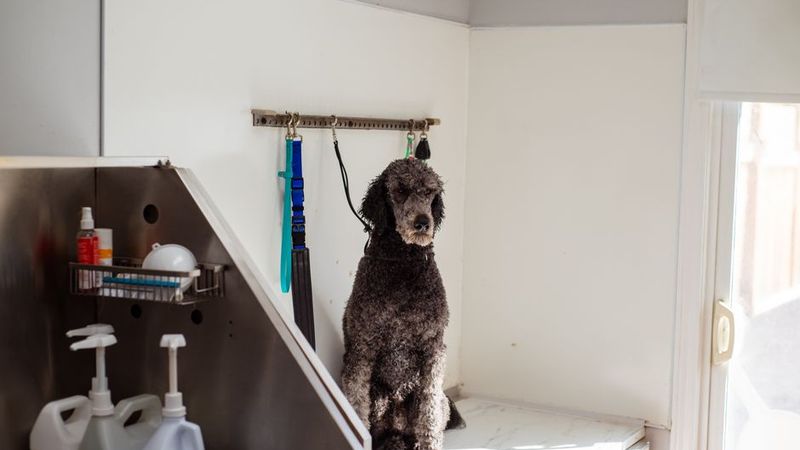
Curly coats, seen on Poodles and Poodle mixes, grow continuously rather than shedding out on a cycle, which means loose hair stays trapped in the curl instead of falling to the floor. Left alone for more than a few days, that trapped hair tightens into mats close to the skin, especially behind the ears, under the legs, and around the collar. Brushing every one to two days with a slicker brush, followed by a metal comb to check for hidden mats near the skin, is the realistic standard for this coat type.
Bathing every three to four weeks, paired with a leave-in conditioning spray, keeps the curl workable between brushings; a dry curly coat mats faster than a conditioned one. Most owners of curly-coated dogs also schedule a professional clip every four to eight weeks, since the coat does not self-maintain at a manageable length the way a shedding coat does.
Wire Coats: Harsh and Textured on the Surface
Wire coats, found on breeds like Airedale Terriers and Wire Fox Terriers, have a harsh, textured topcoat over a softer undercoat, and the texture is what gives the coat its low-shedding reputation. Weekly brushing with a slicker brush or a stripping comb keeps the topcoat tidy, but brushing alone will not maintain the coat's characteristic texture over time.
Hand-stripping, where dead topcoat hairs are pulled out by hand or with a stripping tool rather than cut, is the traditional way to keep a wire coat harsh and weatherproof, typically done every eight to sixteen weeks. Clipping instead of stripping is faster and common for pet dogs, but it gradually softens the coat's texture and can shift its color over time, which is a tradeoff worth knowing rather than a mistake either way.
A Quick Comparison Across Coat Types
The table below summarizes brushing frequency, tools, and bathing frequency across all four coat types for quick reference.
| Coat type | Brushing frequency | Main tool | Bathing frequency |
|---|---|---|---|
| Smooth | 2–3x/week | Rubber curry or grooming mitt | Every 4–8 weeks |
| Double | 3–4x/week (daily when blowing coat) | Undercoat rake, slicker brush | Every 6–8 weeks |
| Curly | Every 1–2 days | Slicker brush, metal comb | Every 3–4 weeks, plus regular clipping |
| Wire | Weekly | Stripping comb or slicker brush | Every 6–8 weeks |
Building Grooming Into the Weekly Routine
Short, frequent sessions generally work better than one long session, both for the coat and for the dog's patience. Ten minutes most days for a curly or double coat, or two slightly longer sessions a week for a smooth or wire coat, tends to stay more manageable than letting mats or loose hair build up for weeks between sessions.
Brushing is also a good moment to run hands over the whole body, checking for lumps, hot spots, or sore areas the dog reacts to, since this routine naturally puts hands all over the dog anyway. Anything unusual found this way, such as a lump, a wound, or a patch of irritated skin, is worth a veterinary look rather than a grooming fix.
Common mistakes
- Bathing a double or curly coat without brushing it out first, which traps loose hair and encourages mats
- Using a slicker brush alone on a wire coat and expecting it to maintain the coat's texture
- Waiting until mats are visible before brushing a curly coat, instead of brushing every day or two
- Over-bathing a smooth or double coat, which can dry out the skin unnecessarily
- Skipping the comb check near the skin after brushing a curly coat, missing mats hiding close to the surface
Frequently asked questions
How do I know which coat type my dog has?
Check whether the coat is short and flat (smooth), has a dense undercoat beneath a longer topcoat (double), grows in continuous curls (curly), or has a harsh, textured topcoat (wire); mixed-breed dogs can show a blend of traits.
Do curly coats really not shed?
Curly coats shed very little onto floors and furniture because loose hair gets caught in the curl rather than falling out, but that trapped hair is exactly what causes matting without frequent brushing.
Can I just clip a wire coat instead of stripping it?
Yes, and many pet owners do; clipping is easier and more common, though it gradually softens the coat's texture compared to hand-stripping.
How often should any dog see a professional groomer?
It depends on coat type: smooth and wire coats often go several months between professional visits, while curly coats typically need a professional clip every four to eight weeks.