A lot of behavior that looks like a training failure is actually an old job showing up in a modern living room. A dog nipping at ankles, digging up the yard, or guarding a couch isn't malfunctioning. It's running a script that was deliberately bred into its ancestors for generations, long before anyone expected that dog to live in a house with no sheep, no vermin, and no property line to patrol.
This article connects five common complaints, herding and nipping, digging, chasing, retrieving obsession, and guarding, back to the working purpose behind them, using real examples from specific breeds. The goal isn't to excuse the behavior or suggest nothing can be done. It's to show that redirecting the instinct into an acceptable outlet usually works better than trying to suppress something the dog is genuinely built to do.
Herding and Nipping: An Instinct to Move Things
Herding breeds were selected for an intense drive to control the movement of livestock, using eye contact, body blocking, and sometimes a nip at the heels to turn a flock. Border Collies were bred to herd sheep almost entirely through eye contact and body pressure, while breeds like the Australian Shepherd and the Pembroke Welsh Corgi (a breed developed specifically to nip at the heels of cattle, low enough to avoid a kick) built the nip itself into the herding style.
In a household with no livestock, that same drive often gets redirected at children running in the yard, cyclists, joggers, or other pets, since fast-moving things trigger the same instinct a flock of sheep would. The fix isn't to punish the nipping in isolation, but to give the instinct a legitimate outlet: structured activities like herding balls, flirt pole games that simulate chasing and controlling movement, or formal herding or agility classes. Pairing that outlet with consistent redirection away from children and joggers, plus the obedience cues covered elsewhere in this category, addresses both the energy and the specific unwanted target.
Digging: A Dig-to-Hunt or Dig-to-Cool Instinct
Digging shows up for a few different underlying reasons, and breed history explains most of them. Terriers like the Jack Russell Terrier were bred specifically to go to ground after burrowing animals, which means digging isn't a bad habit for this breed so much as the exact behavior it was designed to perform. Other breeds dig to create a cool resting spot in hot weather, a behavior seen across many breeds but especially noticeable in those with heavier coats or lower cold tolerance that still get overheated.
- Give a terrier-type dog a designated digging area, like a sandbox or a loose patch of soil, and bury toys or treats there to redirect digging to an approved spot.
- Rule out heat-seeking digging by checking whether the dog has shaded, cool resting options; if digging happens mostly in hot weather near shade, that's often the explanation.
- Increase mental and physical stimulation generally, since under-exercised dogs of any breed often dig out of excess energy rather than instinct specifically.
- Fence off valued garden areas rather than relying on verbal correction alone, since the instinct to dig can be strong enough to override most casual discouragement.
Chasing: Sighthounds, Prey Drive, and Fast-Moving Targets
Sighthounds like the Greyhound and the Whippet were bred to spot movement at a distance and close the gap in a short, explosive sprint, historically chasing game across open ground. That same instinct doesn't distinguish between a rabbit and a neighbor's cat, a skateboard, or a small dog running at the park. This is less about disobedience and more about a hardwired response to fast motion that can override recall in an instant.
| Breed example | Original purpose | Modern redirect |
|---|---|---|
| Greyhound | Sprinting after game over open ground | Supervised lure-chasing sports, securely fenced running space |
| Whippet | Short, explosive bursts chasing small game | Flirt pole play, fenced yard sprints, structured lure coursing |
| Rhodesian Ridgeback | Tracking and holding large game at bay | Scent work, structured tracking games, secure off-leash space |
Because this instinct can override training in the moment, management matters as much as redirection: a securely fenced yard and a leash in any unfenced, unsecured space are non-negotiable for a dog with strong chase drive, regardless of how well recall has been trained. Legitimate outlets like lure coursing or regular, safe sprint sessions in a fenced area give the instinct somewhere to go without risking a dangerous chase after something uncontrolled.
Retrieving Obsession: When Fetch Becomes a Fixation
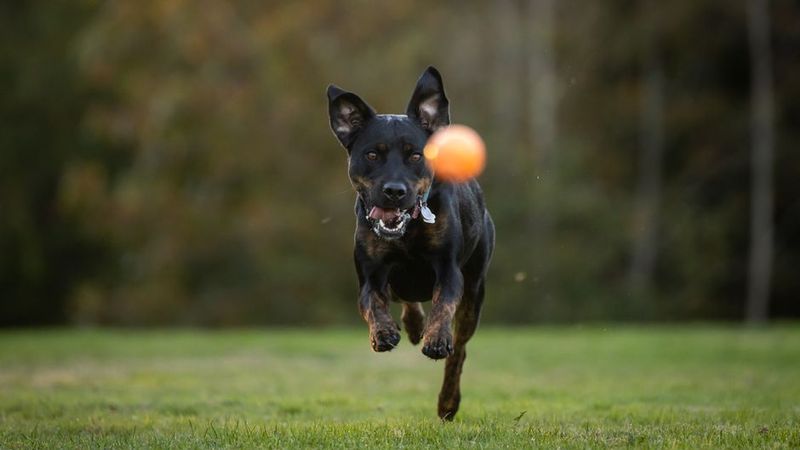
Retrievers, as the name suggests, were bred to carry game back to a hunter without damaging it, a job that selected heavily for a strong desire to hold something in the mouth and bring it to a person. Labrador Retrievers and Golden Retrievers carry this instinct so strongly that some individuals seem to need something in their mouth almost constantly, picking up shoes, pillows, or random household objects not to destroy them but simply to carry them around.
Rather than treating this as a chewing or stealing problem to be corrected, it works better to give the instinct a sanctioned outlet: a specific set of toys always available for carrying, regular structured fetch sessions that burn off the drive to retrieve, and a trained drop it cue so items get back safely when the wrong object gets picked up. Punishing a strong retriever for carrying things around tends to be an uphill battle against a deeply bred instinct; redirecting it to acceptable objects tends to work far better.
Guarding: Territorial and Resource-Related Behavior
Guardian breeds were selected to be alert to unfamiliar people and protective of family and territory, a trait valuable in a working context and sometimes a source of friction in an ordinary household. The Rottweiler and the Doberman Pinscher were both developed with guarding and protection work as part of their original purpose, and that heritage shows up today as a tendency to be watchful of strangers and protective of home and family, which benefits enormously from early, structured socialization so the dog learns which situations actually call for concern.
Guarding behavior directed at resources, like food, toys, or a favorite resting spot, is a related but distinct issue and can occur in any breed, not only guardian breeds. Teaching a dog that people approaching its food or toys is a good thing, by occasionally adding something better to the bowl rather than only ever taking things away, reduces resource guarding over time. True guarding or territorial aggression directed at people or other animals is a more serious matter than the other instincts in this article; if a dog shows growling, stiffening, or snapping around resources or strangers, that calls for a certified trainer or veterinary behaviorist rather than home redirection alone, since the safety stakes are higher than with digging or chasing a toy.
Why Redirecting Works Better Than Suppressing
Across every instinct above, trying to eliminate the drive entirely tends to fail, because the behavior is rooted in generations of deliberate breeding, not a habit the dog picked up by accident. A Border Collie without an outlet for herding doesn't become a dog with no herding instinct; it becomes a dog that herds the vacuum cleaner, the kids, or its own tail out of sheer unmet drive. The same logic applies across the other categories: the instinct needs somewhere to go, not just a reason to stop.
Matching a dog's actual breed tendencies to realistic expectations before bringing one home prevents a lot of this friction in the first place. If you're trying to understand what a specific breed's working history means for everyday life with it, you can compare breeds side by side on exercise needs, trainability, and other relevant traits. For a dog already in the household, the breed reference above is less about changing who the dog is and more about giving its instincts a job that fits inside modern life.
Common mistakes
- Treating herding-related nipping purely as disobedience instead of giving the underlying drive an outlet like a flirt pole or herding activity.
- Punishing digging in a terrier bred specifically for it instead of redirecting to an approved digging spot.
- Relying on recall alone for a strong-chasing sighthound instead of using secure fencing and a leash in open spaces.
- Scolding a retriever for carrying household objects instead of providing sanctioned items and a trained drop it cue.
- Mistaking serious resource guarding or territorial aggression for a simple habit that will resolve with casual correction.
Frequently asked questions
Why does my herding-breed dog nip at my kids' heels?
This usually comes from herding instinct, which was bred into breeds like the Pembroke Welsh Corgi and Australian Shepherd to control livestock movement, including nipping at heels. Fast-moving children can trigger the same response. Structured outlets like flirt pole games and consistent redirection help.
Is digging a bad habit or an instinct?
For terrier breeds like the Jack Russell Terrier, digging is close to the exact job the breed was created for, going to ground after burrowing animals. Giving the dog a designated digging area tends to work better than trying to stop the behavior outright.
Why does my dog chase everything that moves fast?
Sighthound breeds like the Greyhound and Whippet were bred to spot and chase fast movement over open ground, and that instinct can override training in the moment. Secure fencing and leash use in open spaces matter alongside any training.
My retriever carries everything around the house. Is that normal?
Yes, for breeds bred to carry game back to a hunter, like the Labrador Retriever and Golden Retriever, a strong urge to carry objects is typical. Providing designated toys and teaching a reliable drop it cue channels the instinct safely.
When does guarding behavior need professional help instead of home training?
When it involves growling, stiffening, or snapping around resources, strangers, or territory, rather than simple watchfulness. That level of behavior calls for a certified trainer or veterinary behaviorist given the safety stakes involved.