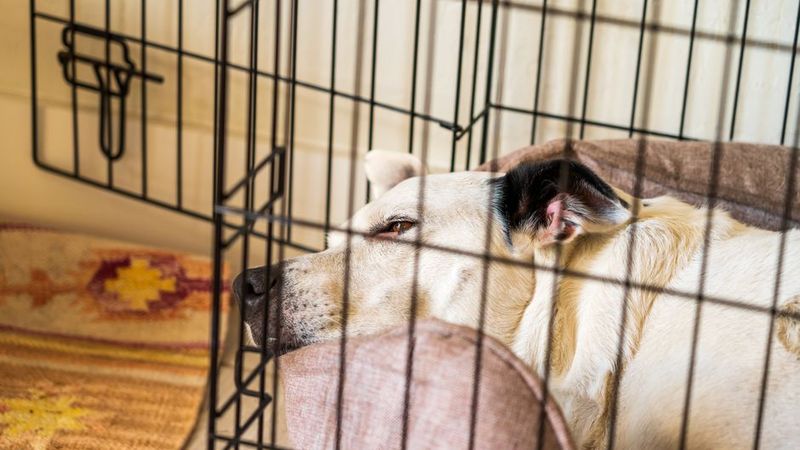
A crate works best as a space a dog chooses to relax in, not a box it gets locked into when an owner runs out of options. The difference between those two outcomes usually comes down to how the crate gets introduced. Rushing the process, closing the door before the dog is comfortable, or using the crate only as a punishment, tends to build the exact anxiety that makes crate training frustrating.
This guide walks through a gradual introduction built around short sessions and the right-sized crate, aimed at a dog that is relaxed and even willing to go in on its own by the end of the process. It applies to puppies learning the crate for the first time and to adult dogs being introduced to one for the first time, though adult dogs with an existing negative association may need a slower pace.
Choosing the Right Crate Size
A crate that's too large defeats some of the purpose, since a dog can use one end as a bathroom and still sleep comfortably in the other, which undermines house-training. A crate that's too small is simply uncomfortable and will build resistance regardless of how well you introduce it. The right size allows the dog to stand up without ducking, turn around freely, and lie down fully stretched out, with a bit of room to spare but not enough to separate into a sleeping area and a bathroom area.
| Dog size (approximate adult weight) | Typical crate length |
|---|---|
| Under 25 lb (11 kg) — e.g., Chihuahua, Yorkshire Terrier | 18-24 in (46-61 cm) |
| 25-50 lb (11-23 kg) — e.g., Beagle, Border Collie | 24-36 in (61-91 cm) |
| 50-90 lb (23-41 kg) — e.g., Labrador Retriever, German Shepherd Dog | 36-42 in (91-107 cm) |
| Over 90 lb (41 kg) — e.g., Great Dane, Saint Bernard | 48 in (122 cm) or larger |
For a growing puppy, a crate divider panel lets you buy the adult size up front and block off extra space temporarily, rather than buying a new crate every few months.
Setting Up the Crate Before You Start Training
Placement and comfort matter before any training begins. Put the crate in a room where the family spends time, not an isolated basement or garage, since a dog that associates the crate with being cut off from everyone is starting from a disadvantage. A comfortable bed or blanket, plus a safe chew toy kept exclusively for crate time, helps the space feel like a reward rather than a holding pen.
Leave the door open at first and let the dog investigate on its own terms. Tossing a few treats near the entrance, then just inside, then toward the back, lets the dog build positive associations by choice rather than by being placed inside. Some dogs explore within minutes; others take a few days of simply walking past an open crate with treats scattered near it before they go in voluntarily.
A Step-by-Step Introduction Process
Moving through these steps gradually, rather than rushing to a closed door and a long stretch of time, is what prevents crate anxiety from developing in the first place. Each step should feel easy and low-stress before moving to the next.
- Open-door exploration (days 1-3): Feed meals near the crate, then just inside the doorway, with the door open and no pressure to stay.
- Short, door-open stays (days 2-5): Toss a stuffed chew toy inside and let the dog settle with the door open, nearby but not shut.
- Brief closed-door sessions (days 4-7): Close the door for 30-60 seconds while the dog has a chew toy, staying in the room, then open it before any whining starts.
- Extending duration gradually (week 2): Increase closed-door time in small increments, a few minutes at a time, always releasing the dog while it's still calm rather than waiting for a complaint.
- Practicing with you out of sight (week 2-3): Leave the room briefly while the dog is settled in the crate, returning before restlessness builds, then gradually extending how long you're out of view.
- Building toward real absences (week 3 onward): Combine a calm pre-crate routine with departures of increasing length, starting with a few minutes and working up to the time the dog will realistically spend crated.
If a dog shows signs of distress, such as frantic scratching, prolonged crying, or panting and drooling beyond what's typical for the dog, at any step, go back to the previous step rather than pushing through. Moving backward for a day or two costs far less time than building a negative association that takes weeks to undo.
How Long Sessions Should Actually Last
Session length should match the dog's age and stage in the process, not a fixed number you apply from day one. A general guideline for puppies is that daytime crate time shouldn't exceed roughly one hour for every month of age, up to about four to six hours, mirroring the same bladder-control math used in house-training. An adult dog that's fully comfortable with the crate can typically handle a standard workday, provided it gets a substantial walk and bathroom break before and after.
- Never use the crate as a consequence for being out longer than the dog can comfortably hold it; adjust the schedule instead.
- Keep early practice sessions short enough that the dog is released before it gets restless, not after.
- Build toward longer absences gradually across days or weeks, not within a single afternoon.
- A water-dispensing bowl attachment can help for longer stretches, but it doesn't replace appropriately timed bathroom breaks.
Avoiding the Crate-as-Punishment Trap
Sending a dog to the crate immediately after a scolding, or using "crate" as a word associated with trouble, undoes a lot of the positive association built during introduction. A dog that learns the crate means isolation after doing something wrong will start resisting a space it might otherwise enjoy. The crate works best when it's a neutral or positive location the dog can choose to retreat to on its own, including when no one is asking it to go there.
Leaving the door open during the day once training is established, after the dog is reliably house-trained and past the chewing-everything stage, often turns the crate into the dog's preferred resting spot rather than a tool only used for confinement.
When Crate Resistance Points to a Bigger Issue
A dog that panics in the crate, shown by injury to its mouth or paws from trying to escape, non-stop howling that doesn't settle, or soiling itself despite being otherwise house-trained, isn't experiencing ordinary crate resistance. That level of distress overlaps with separation-related anxiety and calls for a different, more careful approach, ideally with guidance from a certified trainer or veterinary behaviorist rather than continued attempts at gradual exposure on your own.
For most dogs, though, resistance shows up as mild fussing in the first few sessions and fades steadily as the steps above progress. The difference between ordinary adjustment and a deeper problem usually comes down to intensity and whether the distress is easing over repeated short sessions or getting worse.
Common mistakes
- Buying a crate that's too large, which lets a dog use one end as a bathroom and slows house-training.
- Closing the door for a long stretch on day one instead of building up gradually through short sessions.
- Using the crate as a punishment or isolating it in a room away from the family.
- Releasing the dog only after it whines or cries, which can teach the dog that distress gets it out faster.
- Pushing through visible panic (frantic escape attempts, non-stop howling) instead of stepping back and seeking professional help.
Frequently asked questions
How big should a crate be?
Big enough for the dog to stand without ducking, turn around, and lie down fully stretched out, with a little extra room but not enough to create a separate bathroom corner. A divider panel lets a growing puppy use an adult-sized crate from the start.
How long can I leave a puppy in a crate?
A rough guideline is about one hour of daytime crate time per month of age, up to roughly four to six hours, which lines up with how long a young puppy can comfortably hold its bladder.
Is it cruel to crate train a dog?
A properly introduced crate, built through gradual, positive sessions rather than forced confinement, typically becomes a space a dog chooses to rest in. Problems arise when the crate is used as punishment or when a dog is left for longer than it can handle.
My dog cries every time I close the crate door. What should I do?
Go back to shorter sessions and open-door practice, and only extend duration once the dog is calm at each step. If crying escalates into frantic escape attempts or doesn't ease over repeated short sessions, consult a certified trainer or veterinary behaviorist.
Should I cover the crate with a blanket?
Many dogs settle better with a partial cover that creates a den-like feel, as long as airflow and visibility aren't fully blocked and the dog isn't overheating. Watch the individual dog's reaction and adjust.